Electric Motorcycles: where the market stands and where it's going
Reload.Land 2026, field notes by Sven Rimmele, Mobility Designer at MODYN
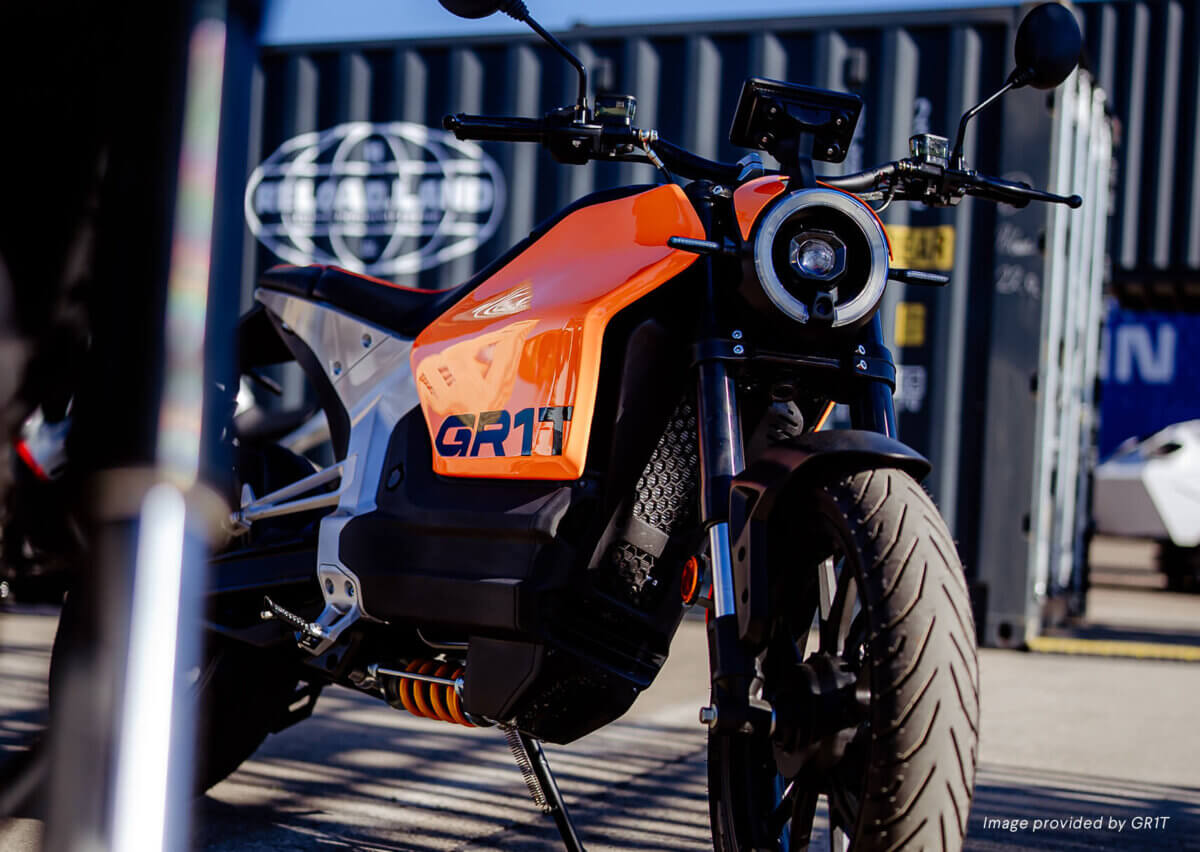
In May 2026 we where at Reload.Land in Berlin, surrounded by electric motorcycles, prototype builders, startup founders, and riders who clearly did not want to be anywhere else, except escaping the first heatwave of the summer between the city beton. Honda had a booth. So did GR1T, that launched six months ago. They were next to each other, and neither looked out of place. That image stuck with me. Something structural has shifted. For anyone building products or making bets in this space, it’s worth understanding what changed and what comes next.
Stark is the clearest proof point. Their electric motocross bikes are converting experienced riders not because of sustainability messaging, but because the bike simply outperforms its gas equivalent. When the product wins on its own terms, you’re no longer selling a category. You’re just selling a better bike.
The range question is fading in urban use cases too. Electric motorcycles are increasingly being evaluated as motorcycles first: design, performance, emotion, riding feel. The powertrain is becoming secondary, not the headline.
Open any major motorcycle magazine today and you’ll still find the same pages: combustion horsepower, heritage brands, the usual. Electric barely gets a mention. The mainstream moto world is still largely looking the other way. Which is exactly why the shift feels structural rather than hype. It’s not coming from the establishment: it’s coming around it.



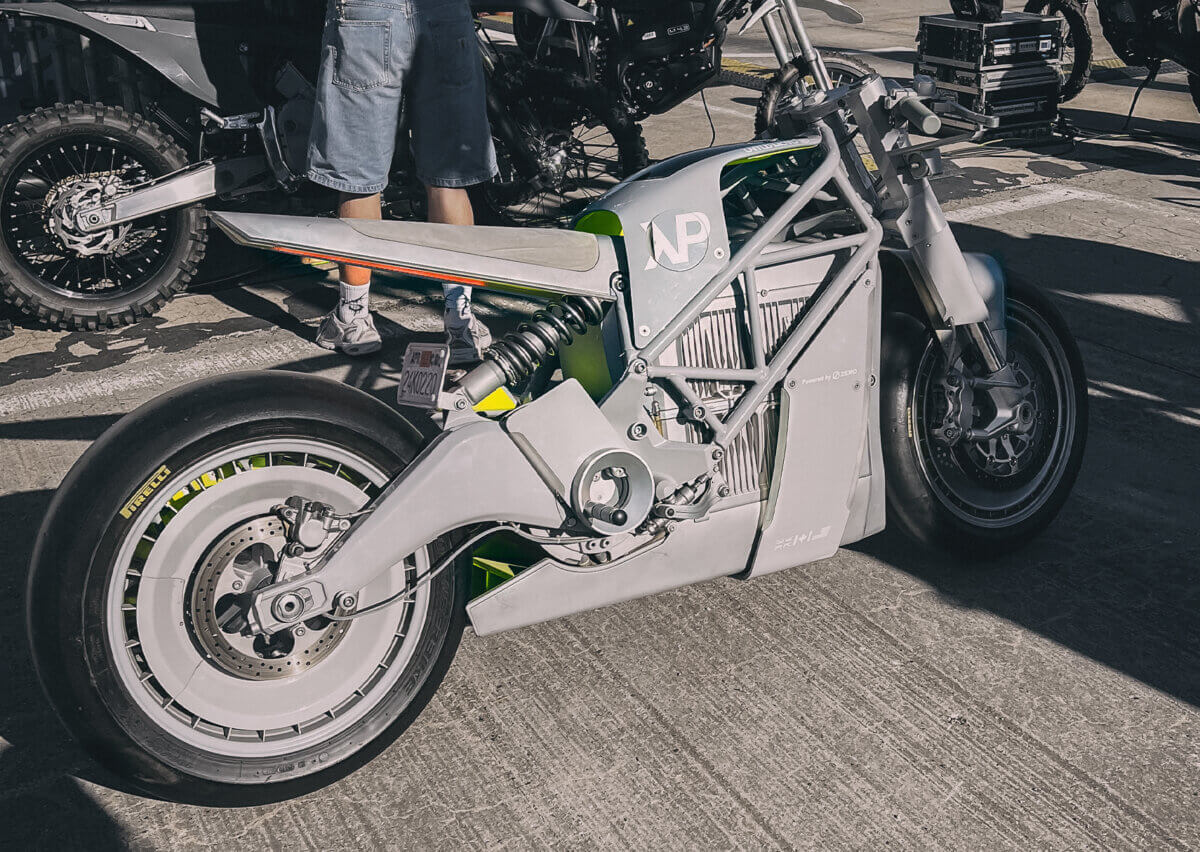

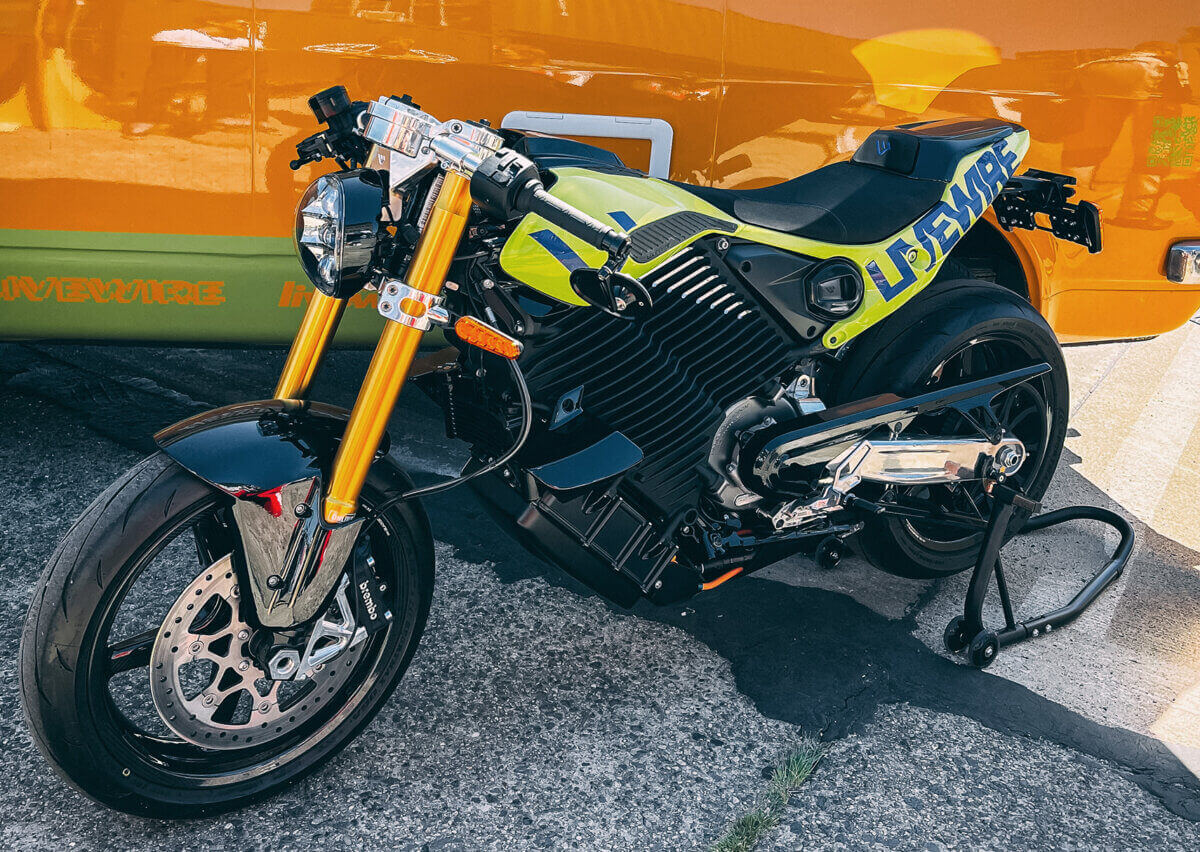
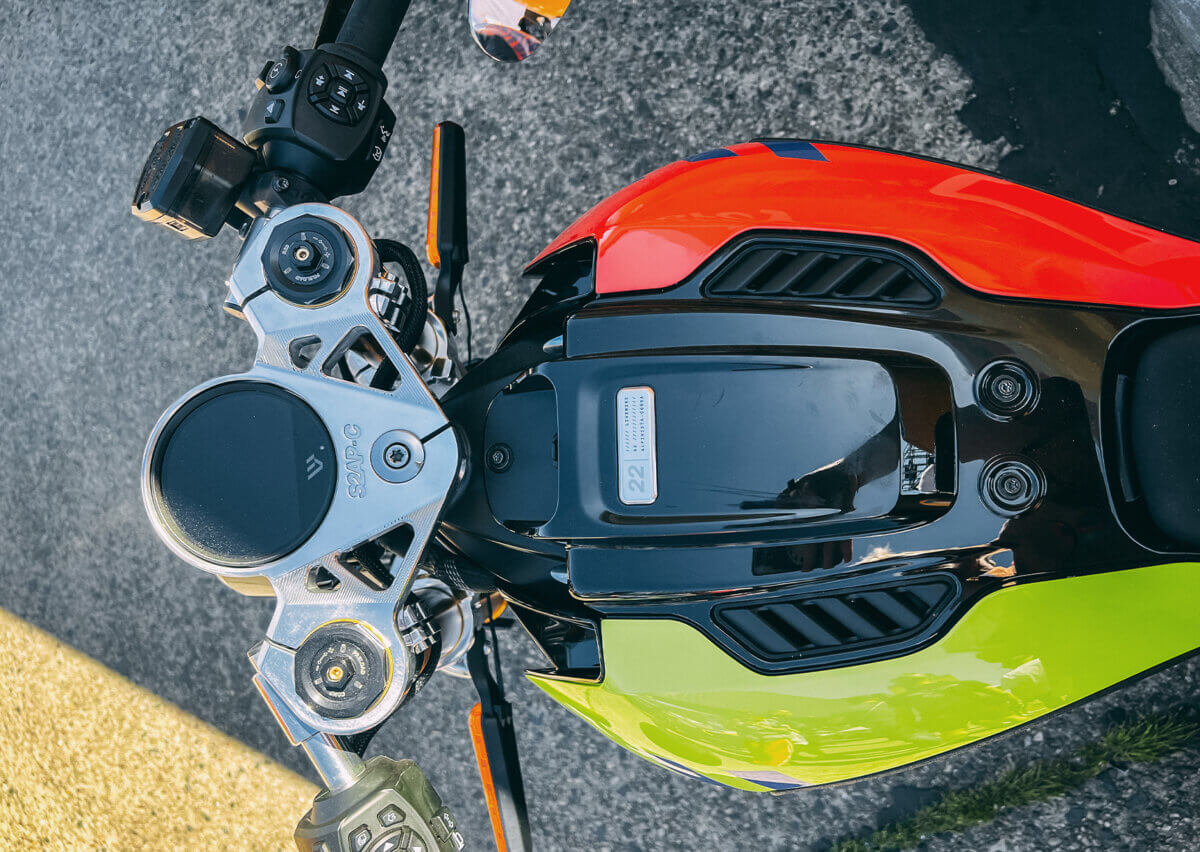
Honda’s entry with the WN7 is a structural marker. When a brand of that scale commits, the category has passed a threshold. Alongside established players like Zero, LiveWire, Can-Am, and Verge, a fast-growing wave of newer entrants is filling every sub-segment.
The off-road space alone is moving fast: LiveWire’s acquisition of startup Dust Moto from Oregon signals exactly where the money is going, and new players are popping up like mushrooms out of the dirt (we like dirt). Most exciting in this category is Bonnell with their two models 805 and 902 – a Surron-killer and a Stark-killer, both hitting production this year with insane horsepower. And the most surprising recent entry: Radian, focused on a smart design solutions for easy battery handling with the 30-second tool-free swap.


The lightweight electric category is pulling in a younger, more urban, more inclusive audience, and it’s changing the culture of the whole space. Surrons, fatbikes, the grey-zone stuff everywhere in European cities…it’s messy at the edges, but what it represents is a generation discovering two wheels through electric. That’s a long-term shift with real market consequences.
The more interesting question is: what comes after the grey zone? LiveWire’s S4 Honcho is one answer. Road-legal, quality-focused instead of only competing on price, real dealer network, and crucially: removable batteries. That last point sounds like a spec detail but it’s a genuine urban insight. If you live in a flat with no garage, pulling the battery indoors to charge is the difference between practical and not usable. BMW has removable batteries on the CE02, but never made it effortless to use them nor made it a story worth telling. A removable battery nobody wants to actually remove doesn’t solve anything.
And there are categories that barely exist yet. ANY Bikes’ LUV1, shown at Milan Design Week with 120 liters of integrated storage, is a signal that urban EV cargo as a serious product category is still wide open.
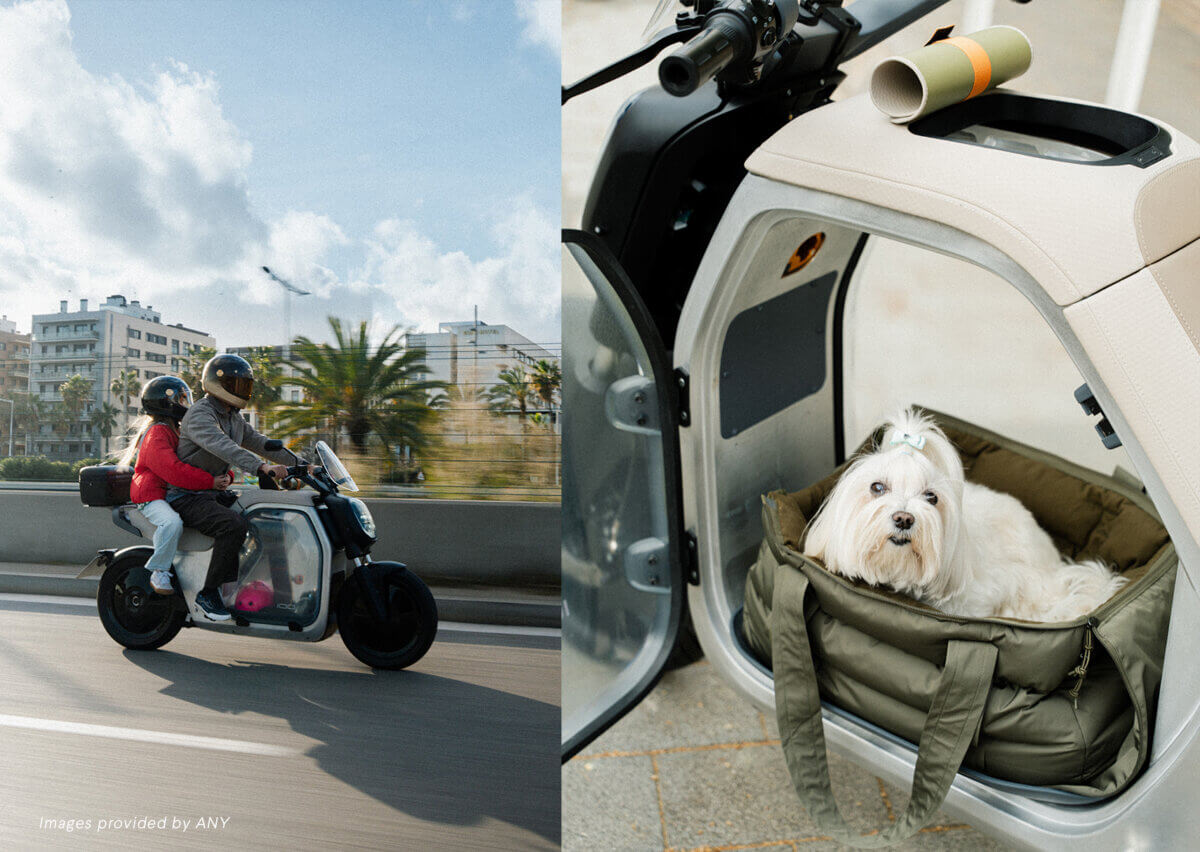

There’s a design logic underneath this split in Design languages between offroad and urban worth noticing. The off-road segment stays deeply rooted in motorcycle DNA because it has to earn credibility with experienced riders who have deep aesthetic and functional opinions. The new urban and lightweight products don’t carry that weight. They’re designed for people who never had a motorcycle identity, which means they can borrow freely from other product worlds. That freedom is actually part of what makes them accessible.
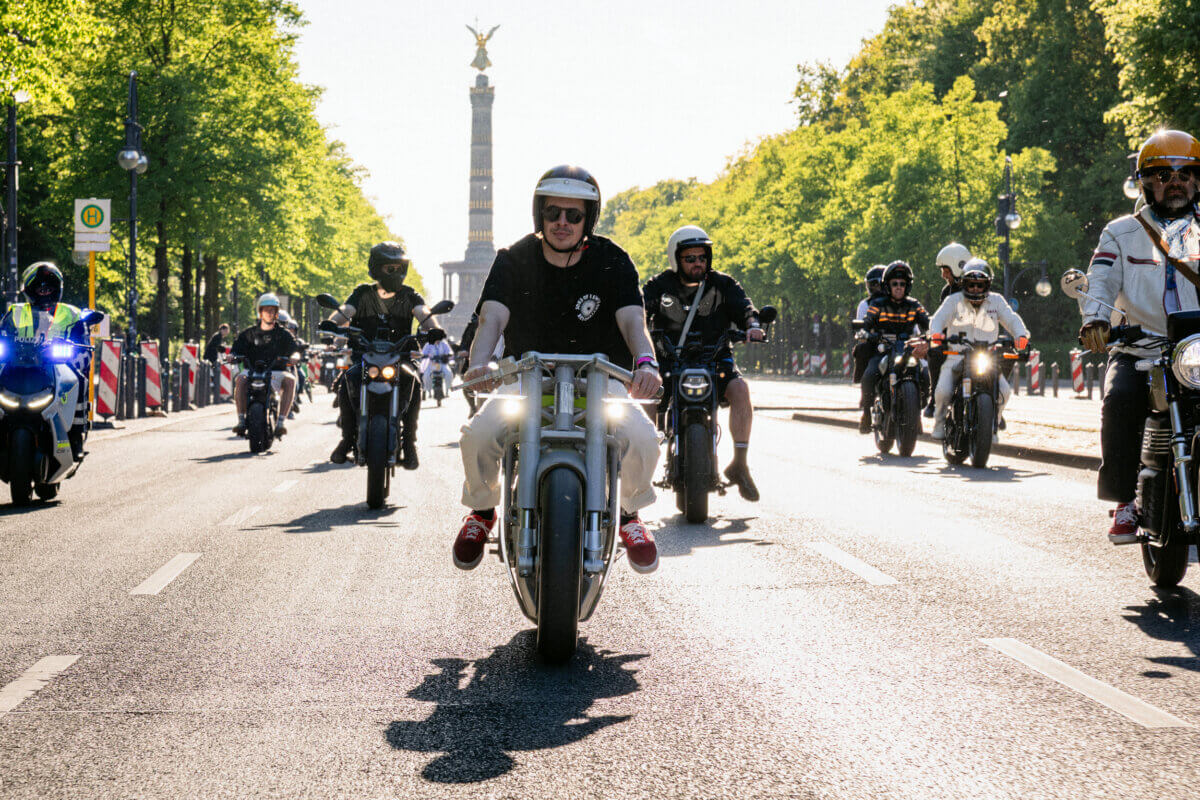
At Reload.Land there’s a silent ride with hundreds of electric bikes moving through Berlin together. You can hear the city, feel the wind, talk to the rider next to you. There’s something genuinely beautiful about it and people on the sidewalk notice it too.
Sven Rimmele: But I’ll be honest. When hundreds of gas riders start their engines at the same time, that collective sound, that physical wave of power, it does something to you. Electric doesn’t have that moment yet, only in Sci-fi movies like Tron.
And yet. Riding through a city without adding to the noise. Carving through a forest track and actually hearing it; birds, wind, the trail itself. That’s a different kind of connection to the ride, and maybe a deeper one. The silence might not be the problem to solve in every category. In the right context, it could be the thing that changes the culture long-term and entirely.
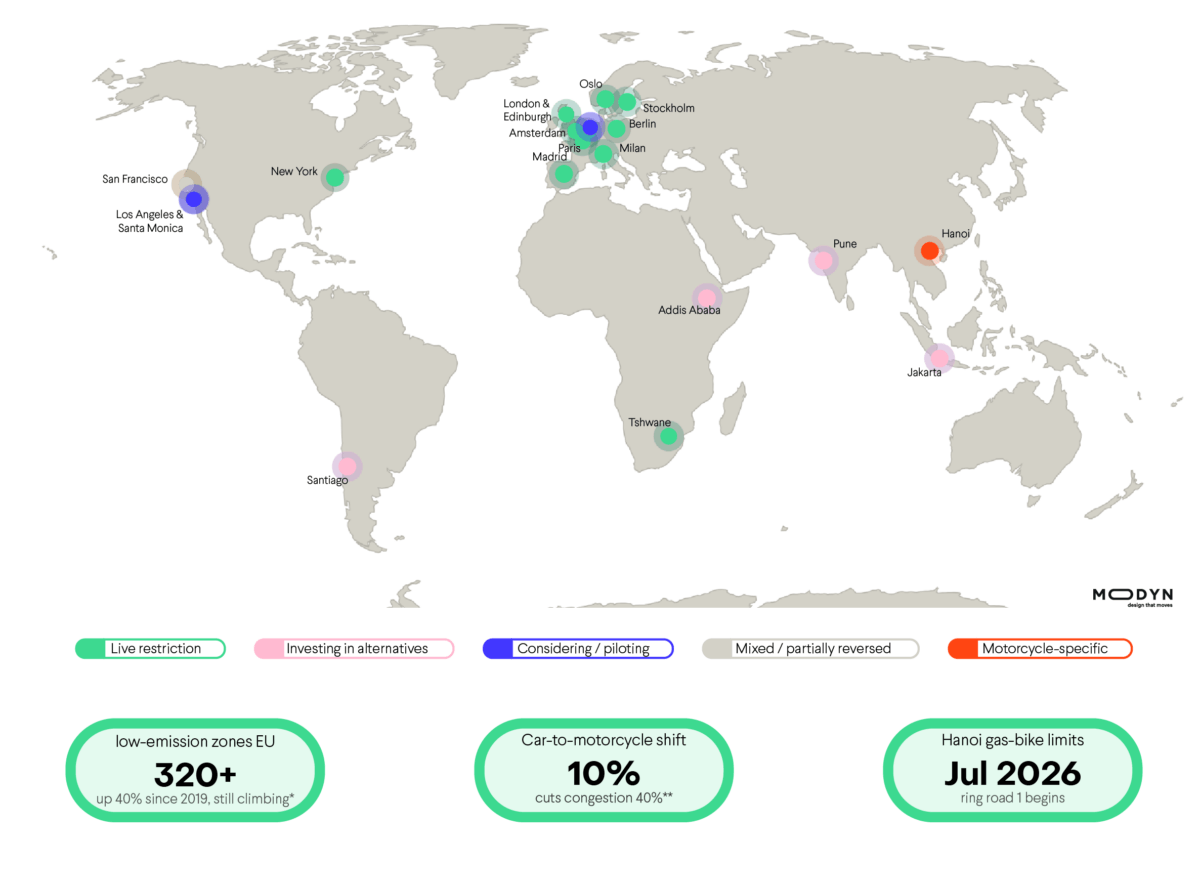
There’s a genuine and accelerating global trend of cities restricting car access in their centers through low-emission zones, congestion pricing, parking removal, and pedestrianization. This isn’t isolated to wealthy European capitals either. Even Hanoi is now actively banning gas motorcycles across large parts of the city. The pattern holds in city after city: less space for cars, more for everything else. The EU’s updated target requires 90% of all new car sales to be electric or zero-emission by 2035. Every electric car on the road normalizes the plug, builds out the charging network, and shifts peoples behaviors and minds. All of this builds the infrastructure and the acceptance that two-wheelers will ride on. A generation is growing up with electric as the default, not the exception. That’s the momentum that matters.
The next phase of this space is not about proving that electric motorcycles work. That’s done. It’s a product and culture game now, and that’s exactly where design does its best work.
Large parts of the EV space are still unmapped. Product categories that don’t exist yet. Design languages that haven’t been found yet. Use cases no one has designed for seriously. The brands that treat design as a strategic factor, not decoration, are the ones with the real advantage from here.
We’re in this space because we think that’s true. If you’re working on your next product, rethinking your design language, or trying to find the real whitespace in this market: let’s talk.
Sources
Clean Cities Campaign report, The Development Trends of Low and Zero Emission Zones in Europe (cleancitiescampaign.org)
Commuting by motorcycle: An assessment of the impact on traffic flow and emissions — Transport & Mobility Leuven (TML), 2011. Commissioned by FEBIAC.
Further reading
If you want to dive deeper on regulations — live maps and data on low-emission zones, urban toll schemes, congestion charges, and car-free zones across every European country: urbanaccessregulations.eu
More on electric motorcycles: thepack.news — Honda EV Outlier concept