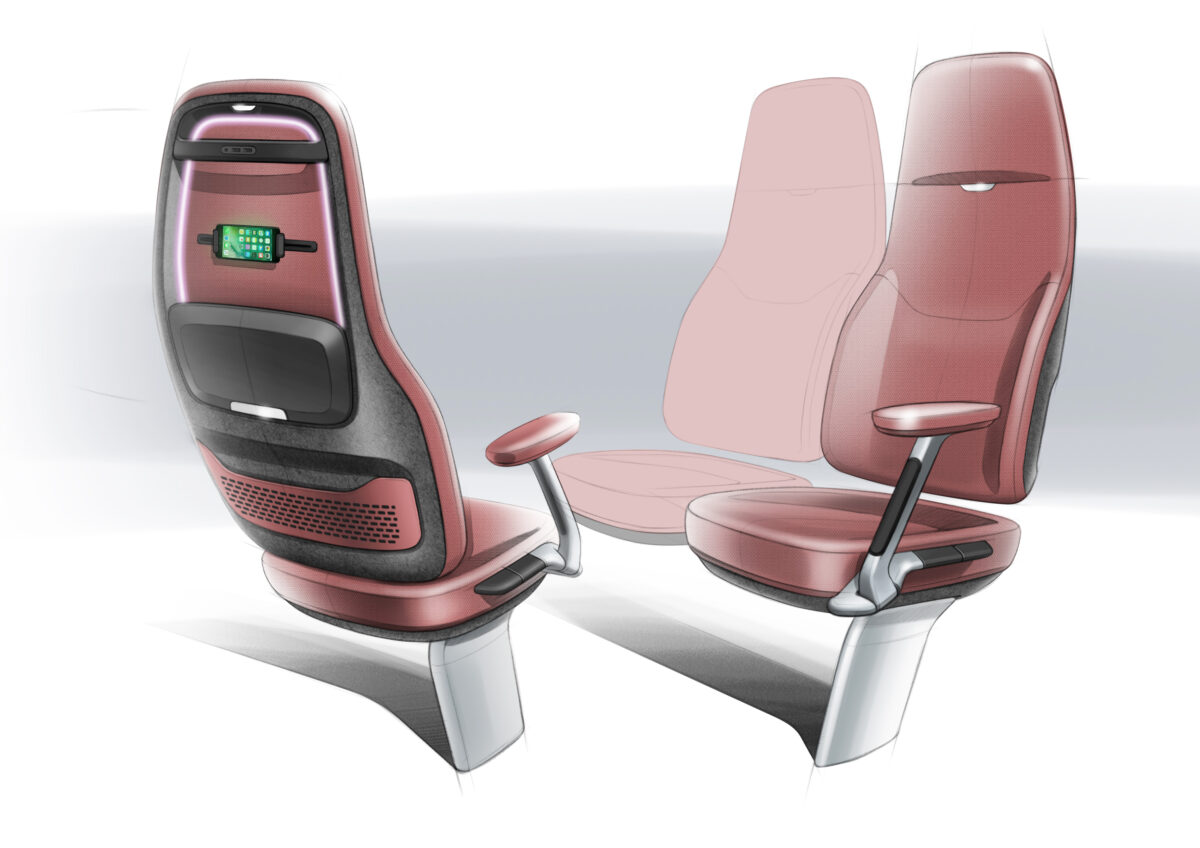
Where do we stand, is sketching still a valuable tool?
The toolkit for designers is constantly changing, recently most notably by AI. So where do we stand, is sketching still a valuable tool? At Modyn we strongly believe it is. In fact, in our studio it is still a crucial tool and it’s applied daily by our designers.
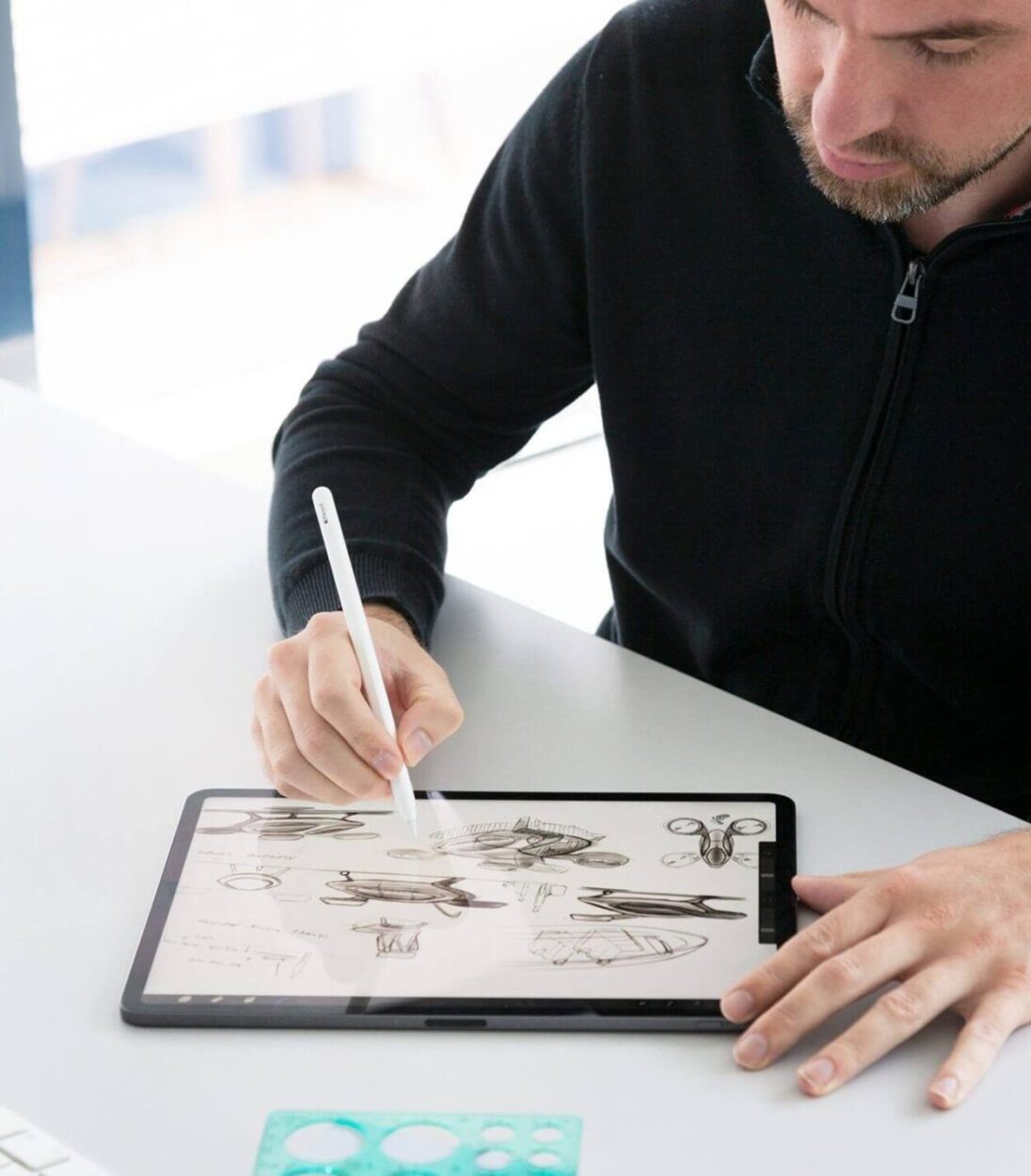
Sketching remains an effective way to support the thinking process, boost idea exploration and communication. It is intuitive, versatile and speeds up processes.
Designing is a process of generating, testing, and refining ideas. Sketching has a speed advantage over other tools. A thought can become a visible idea in seconds, allowing you to explore multiple directions, quickly spot what works, and move on from what doesn’t. Instead of developing one idea at a time in your head or in CAD, you can generate dozens of possibilities in the time it takes to build a single digital model.
Sketching is also a form of spatial thinking. Perspective sketches let you rapidly test proportions, volume, ergonomics, and surface language while ideas are still fluid. The low cost of each iteration makes it easier to experiment, take risks, and make changes early, before committing time to CAD, where every change carries a greater cost.
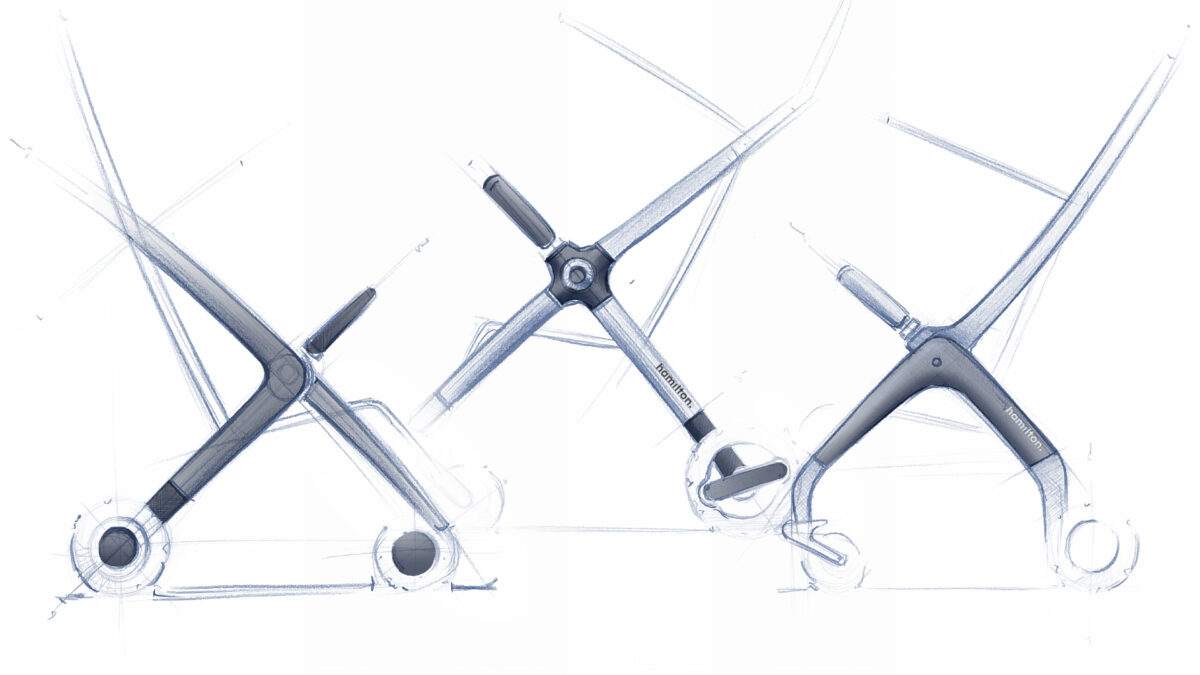
As product development becomes increasingly complex, collaboration is essential. Designers often sit at the centre of a network connecting business owners, engineers, manufacturers, product managers, legislators, and end users. Each discipline brings its own language, priorities, and way of looking at a problem.
Sketches provide a common visual language between these different perspectives. Rather than relying on technical terminology, lengthy presentations, or written explanations, a sketch allows an idea to be understood at a glance and discussed from multiple viewpoints. It can reveal misunderstandings early, make questions more concrete, and give different disciplines something specific to respond to.
The level of finish also matters. A rough sketch communicates that an idea is still open to interpretation, making it easier for others to challenge, adapt, or build on it. A highly polished render, by contrast, can imply that key decisions have already been made, shifting attention towards details rather than the underlying concept. In this sense, the value of a sketch is not necessarily in how accurately it depicts the final product, but in how effectively it enables a conversation.
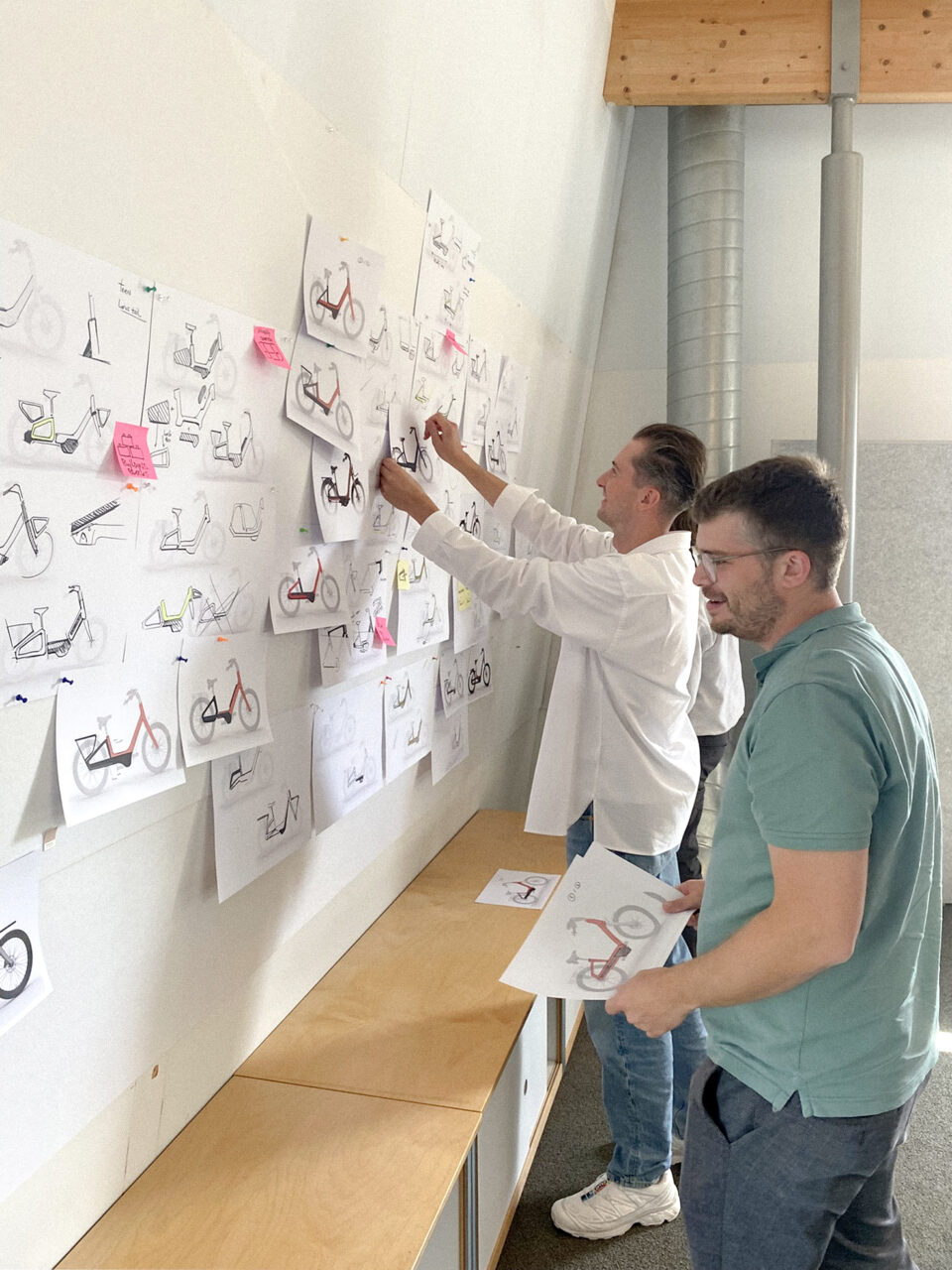
While sketching can help people communicate with one another, it also helps designers make sense of the problem itself. Product briefs often begin as a collection of requirements, ambitions, constraints, and uncertainties. Before there is a clear design direction, these can feel abstract and disconnected.
Sketching is a way of giving that ambiguity form. A few lines can begin to express what a product should feel like, how it might behave, or what character it should have. Rather than simply describing requirements, the sketch proposes a possible future, something the team can see, question, and develop.
This makes sketching particularly powerful at the beginning of a project. A strong concept sketch can turn an abstract brief into a tangible vision without pretending that all the answers have been resolved. As the project progresses, it can also act as a reference point: a reminder of the original intention when technical constraints, commercial considerations, or incremental decisions begin to pull the design in different directions.
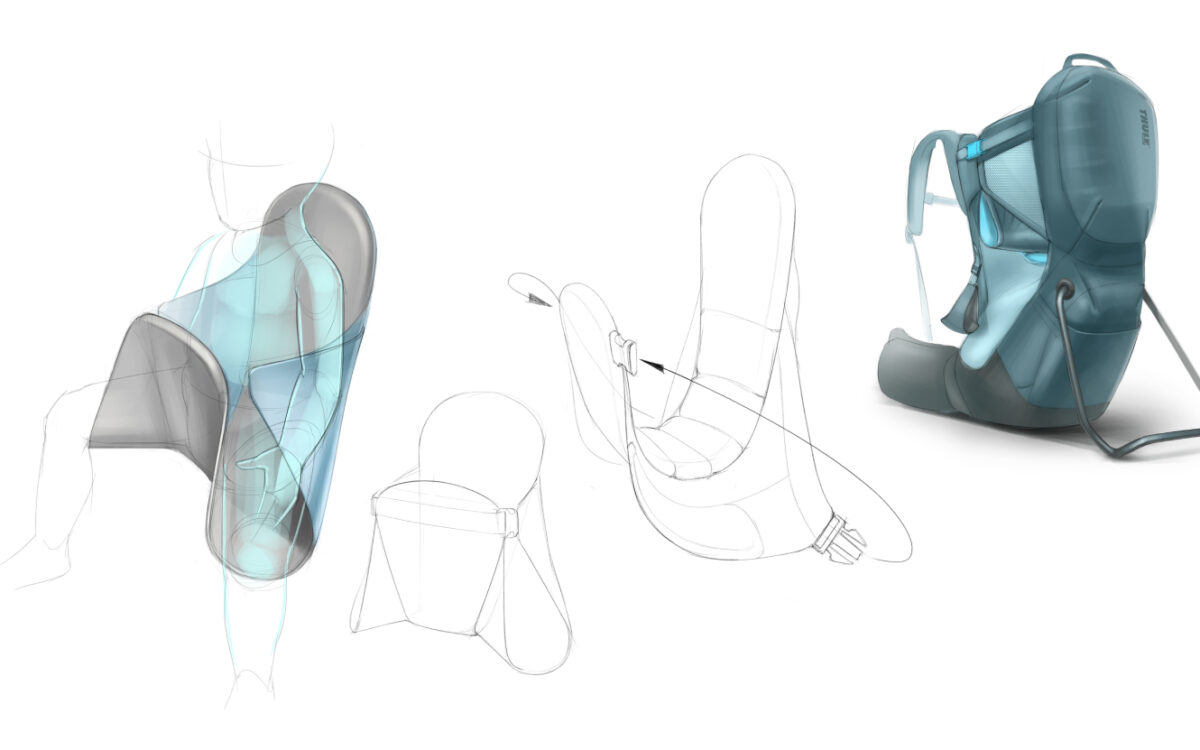
Companies don’t just want functional products, they want products that stand out. And the first idea is rarely the best one. Designers may produce dozens or even hundreds of sketches before arriving at a refined concept. It allows designers to compare variations, recognise what makes one direction stronger than another, and gradually move beyond the obvious solution.
By repeatedly drawing, subtle differences in proportion, character, and detail become visible. A curve can become more elegant, a transition more coherent, or a product’s proportions more distinctive.
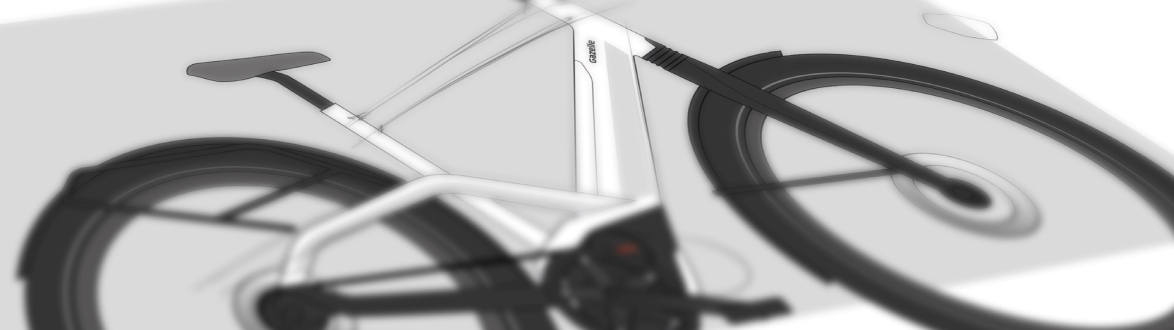
As ideas become more defined, CAD allows designers to test, refine, and resolve them with increasing accuracy. Even during CAD development, sketching remains valuable. Our designers often sketch over screenshots or 3D models to explore surfaces, proportions, and transitions before returning to the model. These quick interventions can introduce the subtle adjustments that turn a technically resolved product into one that feels considered and naturally designed.
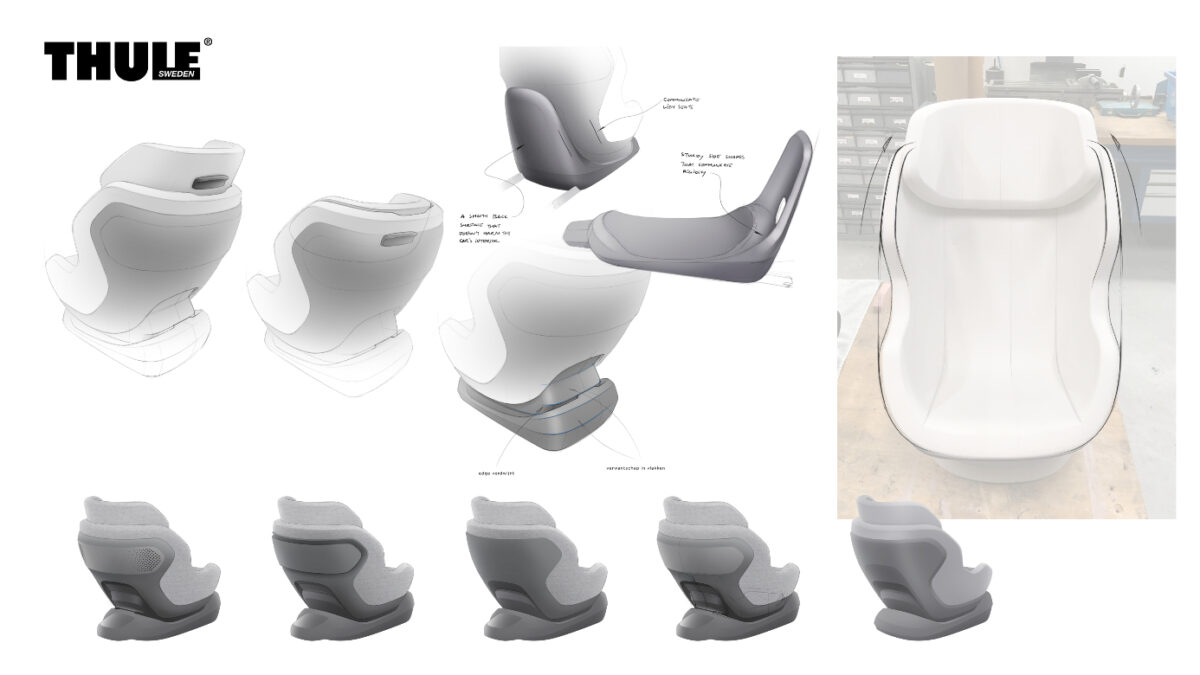
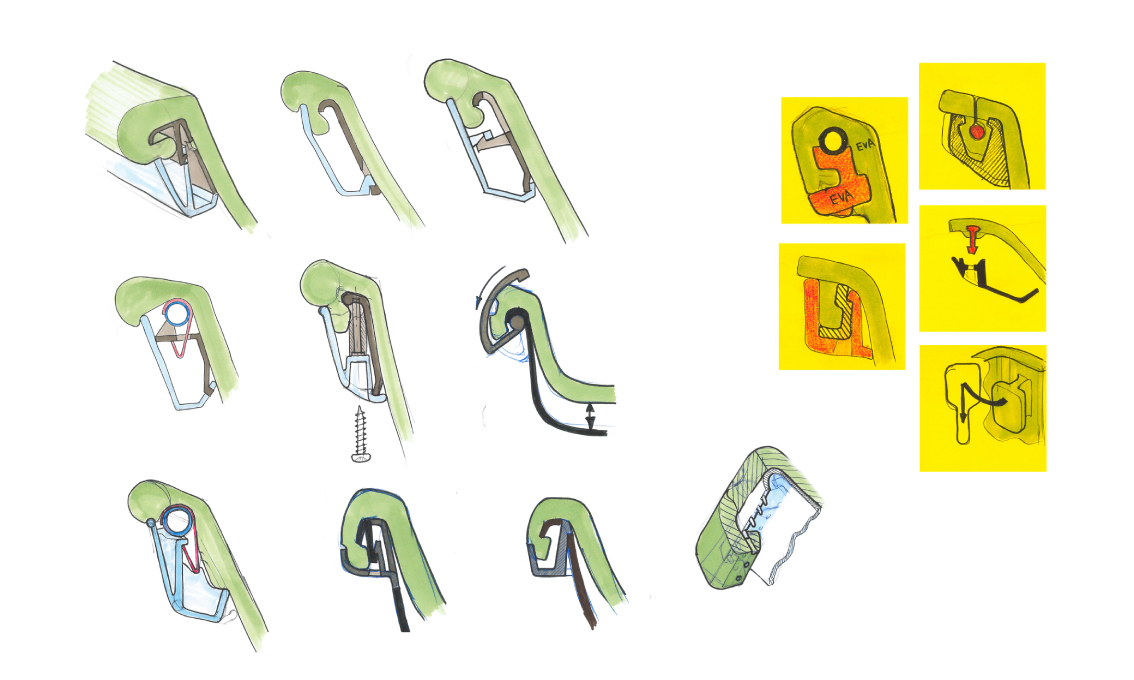
Sketching often isn’t a design deliverable. In engineering, problems are frequently solved through quick sketches that are shared among team members to explore and discuss multiple solutions to a specific challenge. These can be simple drawings on sticky notes illustrating working principles, construction details, fixations, or mechanisms.
With relatively little effort, well-founded decisions can be made before moving into detailed CAD work, significantly reducing both development and meeting time.
One can’t deny the influence of AI on the design process. We believe AI is a valuable addition to the designer’s toolkit, but it is not a replacement for sketching.
It excels at producing photorealistic visualisations and generating quick design alternatives. However, the usefulness of those alternatives still depends on chance, prompting, and careful selection by the designer. Also, in our experience, the best results are achieved with a sketch as initial input.
Current AI visualisation tools also tend to converge towards similar visual styles. The results can feel generic, whereas clients expect original concepts that reflect their unique brand identity.
Most importantly, AI generates images. Sketching generates ideas. Early in the design process, a simple sketch often communicates the essence and direction of a project more effectively than a finished render.
Why sketching still matters
Sketching opens a path to innovative ideas. It is not limited by what CAD software can create or what AI has been trained on; instead, it primarily draws on imagination. A skilled individual designer can therefore explore visions of the future in a short amount of time. It is precisely this freedom that often leads to unique solutions, new insights, and a surprising degree of generativity.
1. It accelerates decision-making
Sketching makes it easier to make decisions by putting alternatives side by side. Designers can quickly explore different directions, compare them, and identify which ideas are worth developing — before committing time to CAD.
It also makes decisions easier to change. When an idea doesn’t work, it can be discarded in seconds rather than after hours of modelling. Sketching therefore helps designers make more informed decisions, earlier, when changing direction is still easy and inexpensive.
2. It improves collaboration
Sketches bridge the gap between design intent, engineering feasibility, manufacturing reality, and business goals. They make ideas visible, allowing everyone to point, question, annotate, and contribute.
By reducing ambiguity and encouraging discussion, sketching helps multidisciplinary teams align more quickly and make better-informed decisions.
3. It leads to better products
Sketching encourages broad exploration before deep refinement, leading to products that are more innovative, manufacturable, and meaningful. It exposes hidden assumptions, reveals opportunities early, and supports creative problem-solving throughout the entire development process.
Ultimately, sketching is not an old-fashioned design skill, it is one of the fastest and most effective thinking tools product designers still have.