The future of UX design in the car design world
Welcome to the International Automobile Exhibition (IAA), where the future of transportation and automotive design comes to life. Held every two years, the IAA showcases a diverse range of vehicles, from small scooters to self-driving buses.
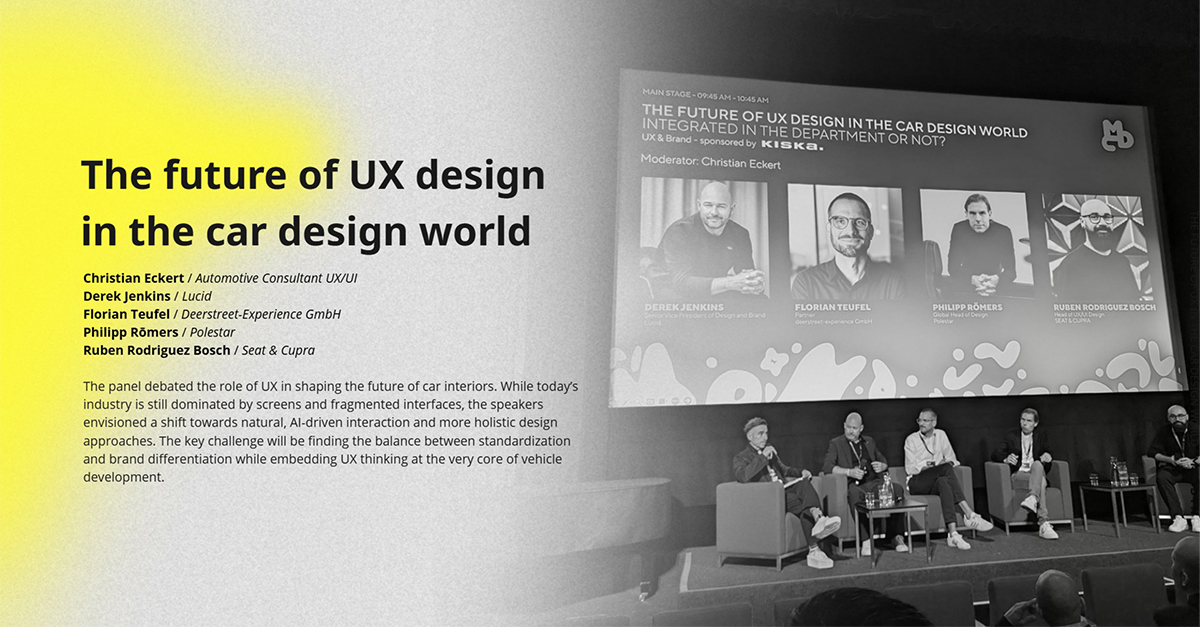
The panel debated the role of UX in shaping the future of car interiors. While today’s industry is still dominated by screens and fragmented interfaces, the speakers envisioned a shift towards natural, AI-driven interaction and more holistic design approaches. The key challenge will be finding the balance between standardization and brand differentiation while embedding UX thinking at the very core of vehicle development.
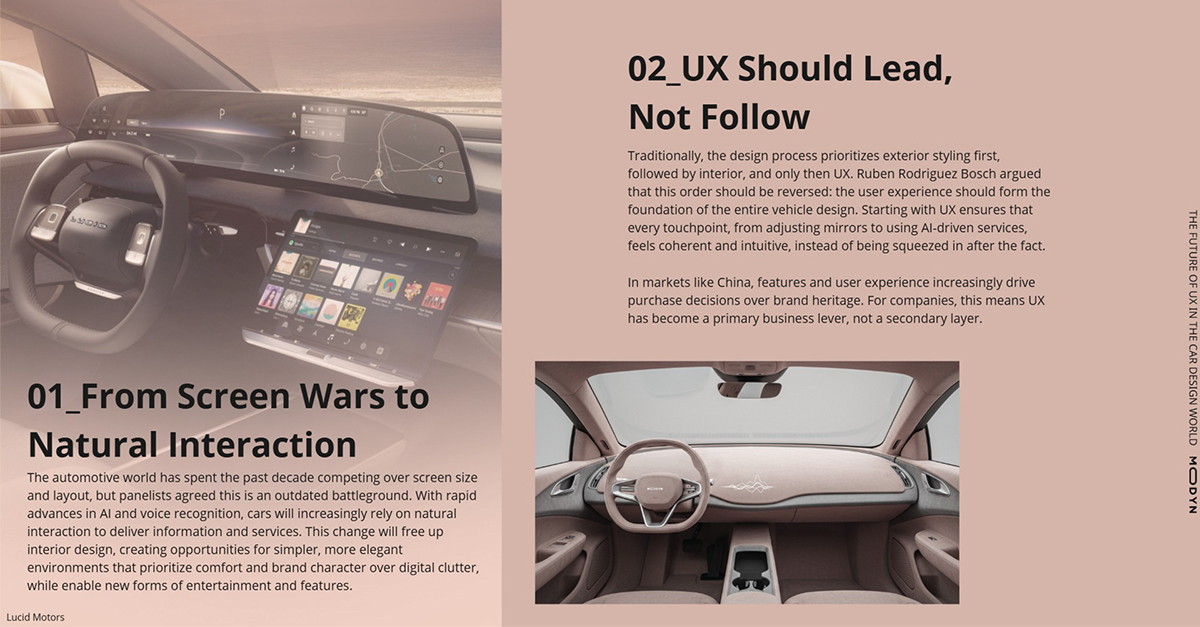
From Screen Wars to Natural Interaction
UX Should Lead, Not Follow
Traditionally, the design process prioritizes exterior styling first, followed by interior, and only then UX. Ruben Rodriguez Bosch argued that this order should be reversed: the user experience should form the foundation of the entire vehicle design. Starting with UX ensures that every touchpoint, from adjusting mirrors to using AI-driven services, feels coherent and intuitive, instead of being squeezed in after the fact.
In markets like China, features and user experience increasingly drive purchase decisions over brand heritage. For companies, this means UX has become a primary business lever, not a secondary layer.
Standardization vs. Differentiation
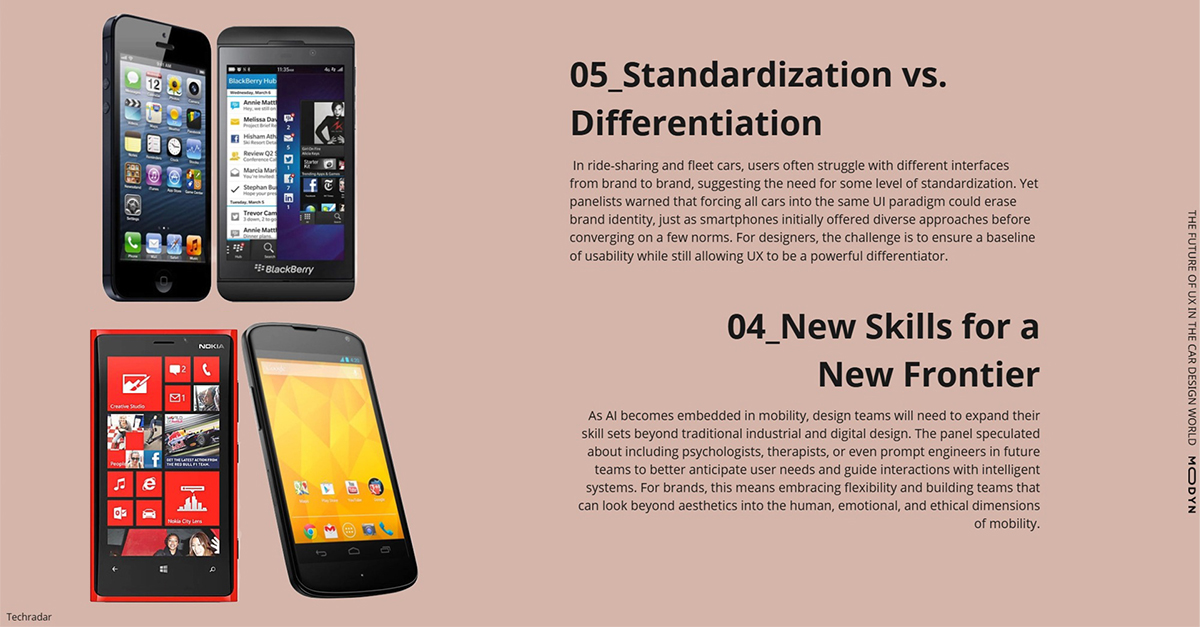
In ride-sharing and fleet cars, users often struggle with different interfaces from brand to brand, suggesting the need for some level of standardization. Yet panelists wa rned that forcing all cars into the same UI paradigm could erase brand identity, just as smartphones initially offered diverse approaches before converging on a few norms. For designers, the challenge is to ensure a baseline of usability while still allowing UX to be a powerful differentiator.
New Skills for a New Frontier
As AI becomes embedded in mobility, design teams will need to expand their skill sets beyond traditional industrial and digital design. The panel speculated about including psychologists, therapists, or even prompt engineers in future teams to better anticipate user needs and guide interactions with intelligent systems. For brands, this means embracing flexibility and building teams that can look beyond aesthetics into the human, emotional, and ethical dimensions of mobility.
This panel explored the rapid digitalization of CMF (color, materials, finishes) processes. While new tools allow for faster iterations and earlier decisions, challenges remain around trust, standardization, and ensuring digital accuracy matches physical reality. The discussion emphasized the evolving skill set of CMF designers as they navigate this hybrid physical-digital world.
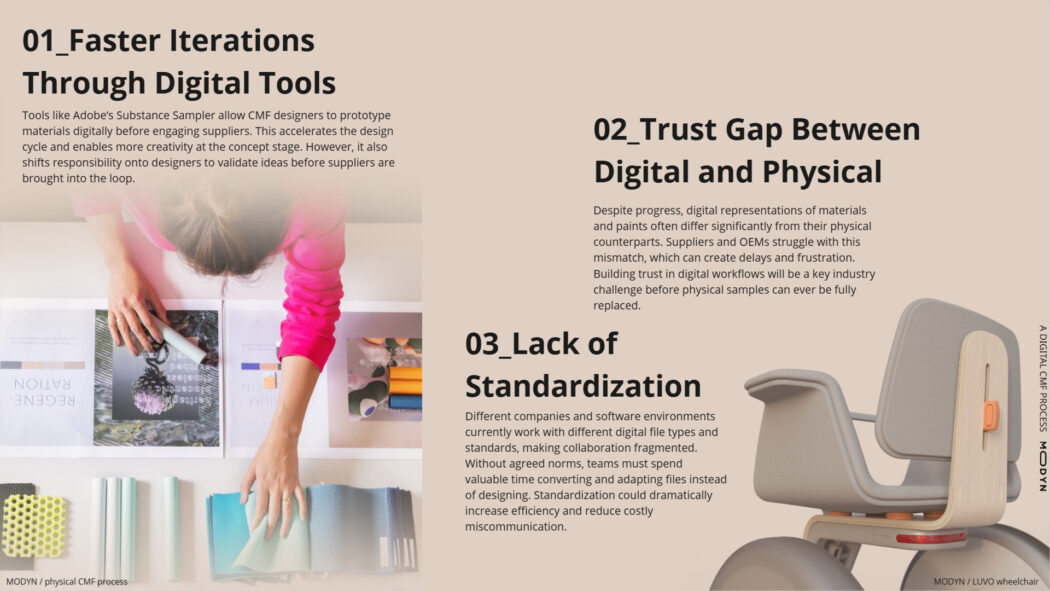
Tools like Adobe’s Substance Sampler allow CMF designers to prototype materials digitally before engaging suppliers. This accelerates the design cycle and enables more creativity at the concept stage. However, it also shifts responsibility onto designers to validate ideas before suppliers are brought into the loop.
Trust Gap Between Digital and Physical
Despite progress, digital representations of materials and paints often differ significantly from their physical counterparts. Suppliers and OEMs struggle with this mismatch, which can create delays and frustration. Building trust in digital workflows will be a key industry challenge before physical samples can ever be fully replaced.
Lack of Standardization
Different companies and software environments currently work with different digital file types and standards, making collaboration fragmented. Without agreed norms, teams must spend valuable time converting and adapting files instead of designing. Standardization could dramatically increase efficiency and reduce costly miscommunication.
Evolving Role of CMF Designers
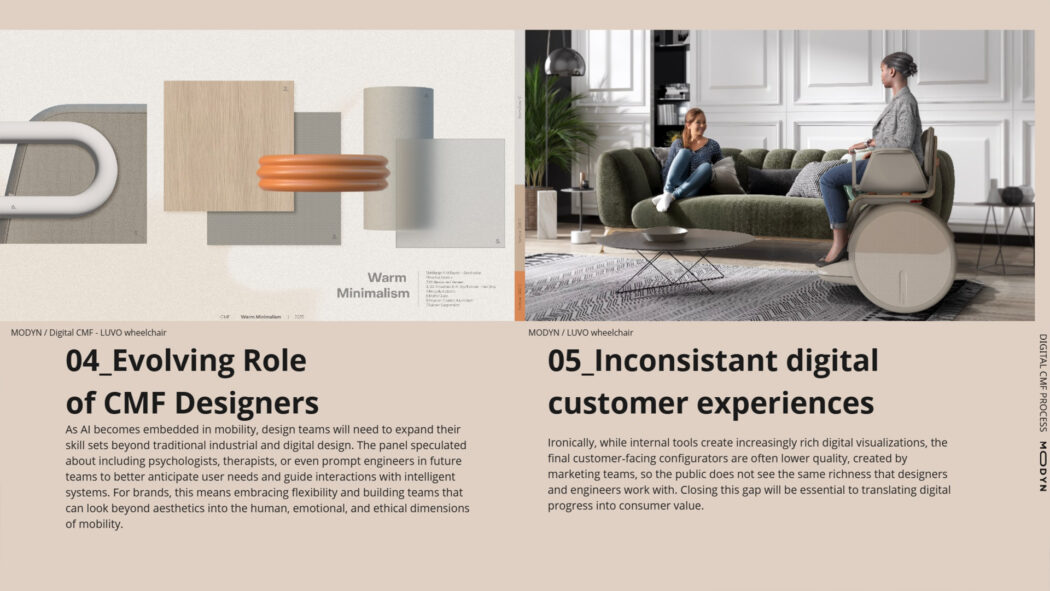
As AI becomes embedded in mobility, design teams will need to expand their skill sets beyond traditional industrial and digital design. The panel speculated about including psychologists, therapists, or even prompt engineers in future teams to better anticipate user needs and guide interactions with intelligent systems. For brands, this means embracing flexibility and building teams that can look beyond aesthetics into the human, emotional, and ethical dimensions of mobility.
Inconsistent digital customer experiences
Ironically, while internal tools create increasingly rich digital visualizations, the final customer-facing configurators are often lower quality, created by marketing teams, so the public does not see the same richness that designers and engineers work with. Closing this gap will be essential to translating digital progress into consumer value.
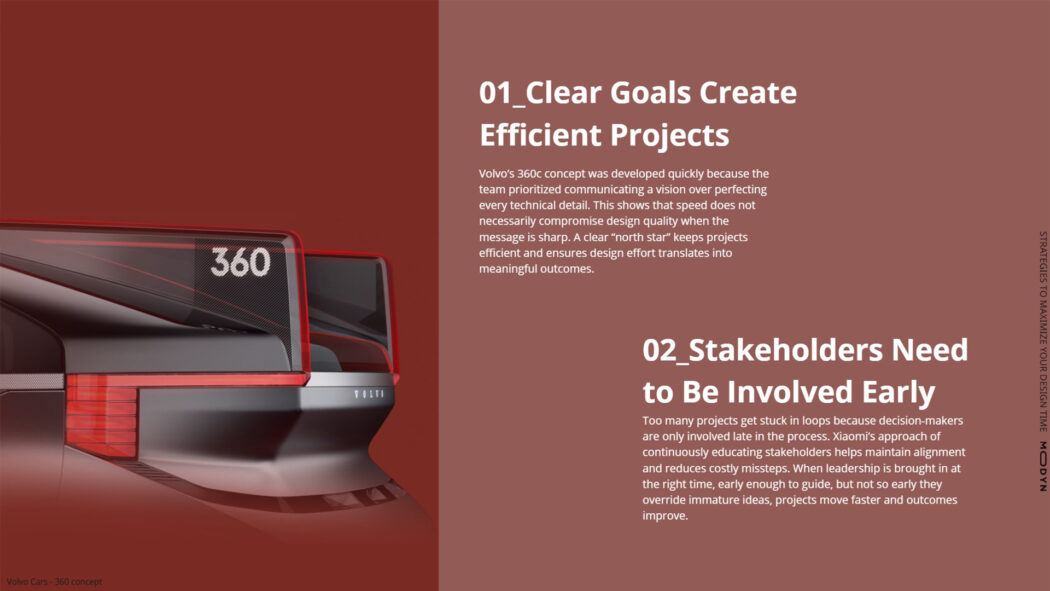
Volvo’s 360c concept was developed quickly because the team prioritized communicating a vision over perfecting every technical detail. This shows that speed does not necessarily compromise design quality when the message is sharp. A clear “north star” keeps projects efficient and ensures design effort translates into meaningful outcomes.
Stakeholders Need to Be Involved Early
Too many projects get stuck in loops because decision-makers are only involved late in the process. Xiaomi’s approach of continuously educating stakeholders helps maintain alignment and reduces costly missteps. When leadership is brought in at the right time, early enough to guide, but not so early they override immature ideas, projects move faster and outcomes improve.
Design as a Problem-Solving Tool
Designers are often misunderstood inside organizations as purely visual stylists. In reality, design is a method of solving user and business problems. When designers are integrated into operations, planning, and everyday decision-making, they don’t just make products look better, they help organizations work smarter. Companies that embrace this broader role of design unlock value that extends far beyond aesthetics.
Stakeholder Alignment Must Happen Early
Too many projects get stuck in loops because decision-makers are only involved late in the process. Xiaomi’s approach of continuously educating stakeholders helps maintain alignment and reduces costly missteps. When leadership is brought in at the right time, early enough to guide, but not so early they override immature ideas, projects move faster and outcomes improve.
User Insights are essential
Tech companies like Xiaomi rely on massive datasets to guide their design process, while Volvo takes a more field-based approach, sending designers and staff to interact directly with users. Despite these differences, both stressed that grounding design in real user behavior is essential. Without this, even the most beautiful design risks missing its audience.
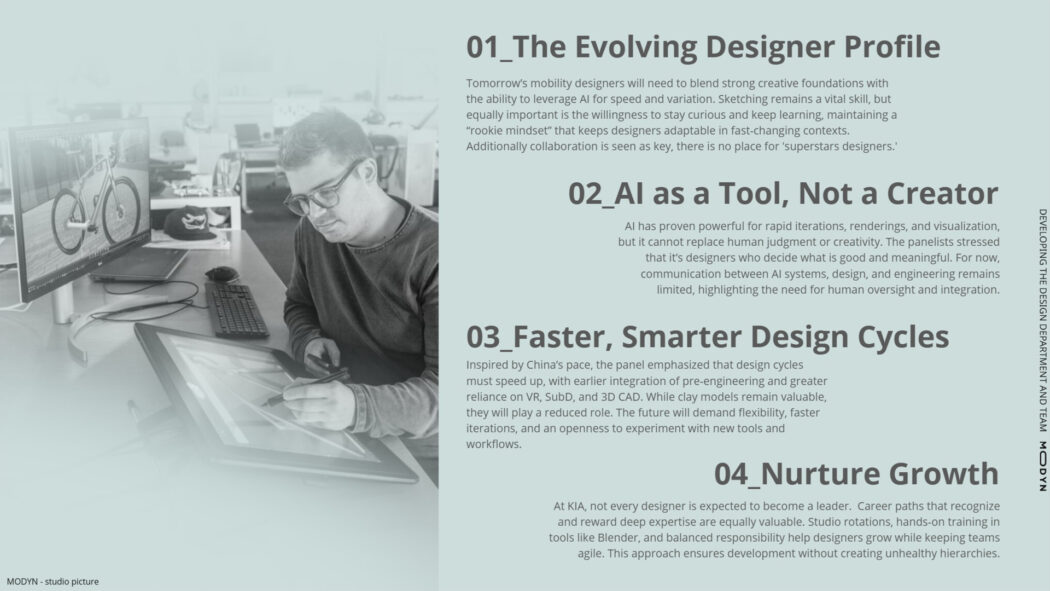
The panel explored what it takes to build future-ready design teams in an era shaped by AI, new tools, and shifting expectations. The speakers emphasized that while technology is transforming processes, the human qualities of creativity, judgment, and collaboration remain irreplaceable. From rethinking career paths to integrating AI responsibly, the conversation offered a clear roadmap for how design organizations can evolve without losing their soul.Circular materials and sustainable production are no longer niche experiments, they are becoming mainstream expectations. German brands show how colors, fabrics, and thoughtful material choices can carry identity while aligning with global demands for responsibility.
The Evolving Designer Profile
Tomorrow’s mobility designers will need to blend strong creative foundations with the ability to leverage AI for speed and variation. Sketching remains a vital skill, but equally important is the willingness to stay curious and keep learning, maintaining a “rookie mindset” that keeps designers adaptable in fast-changing contexts. Additionally collaboration is seen as key, there is no place for ‘superstars designers.
AI as a Tool, Not a Creator
AI has proven powerful for rapid iterations, renderings, and visualization, but it cannot replace human judgment or creativity. The panelists stressed that it’s designers who decide what is good and meaningful. For now, communication between AI systems, design, and engineering remains limited, highlighting the need for human oversight and integration.
Faster, Smarter Design Cycles
Inspired by China’s pace, the panel emphasized that design cycles must speed up, with earlier integration of pre-engineering and greater reliance on VR, SubD, and 3D CAD. While clay models remain valuable, they will play a reduced role. The future will demand flexibility, faster iterations, and an openness to experiment with new tools and workflows.
Nurture Growth
At KIA, not every designer is expected to become a leader. Career paths that recognize and reward deep expertise are equally valuable. Studio rotations, hands-on training in tools like Blender, and balanced responsibility help designers grow while keeping teams agile. This approach ensures development without creating unhealthy hierarchies.
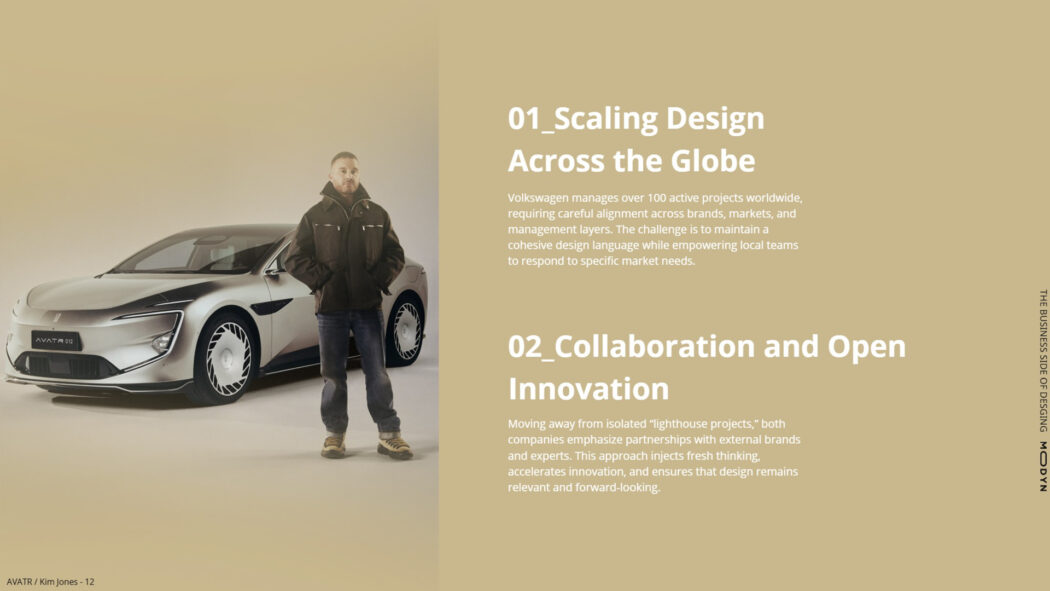
Design is no longer just a creative function, it has become a strategic driver of business outcomes. This panel explored how global companies like Volkswagen and design studios like Avatar structure processes, leverage technology, and embed design at the executive level to deliver value quickly while maintaining long-term brand identity. From AI and 3D tools to agile workflows, the discussion highlighted the balance between speed, creativity, and strategic thinking required in today’s design-driven organizations. Volkswagen manages over 100 active projects worldwide, requiring careful alignment across brands, markets, and management layers. The challenge is to maintain a cohesive design language while empowering local teams to respond to specific market needs.
Collaboration and Open Innovation
Moving away from isolated “lighthouse projects,” both companies emphasize partnerships with external brands and experts. This approach injects fresh thinking, accelerates innovation, and ensures that design remains relevant and forward-looking.
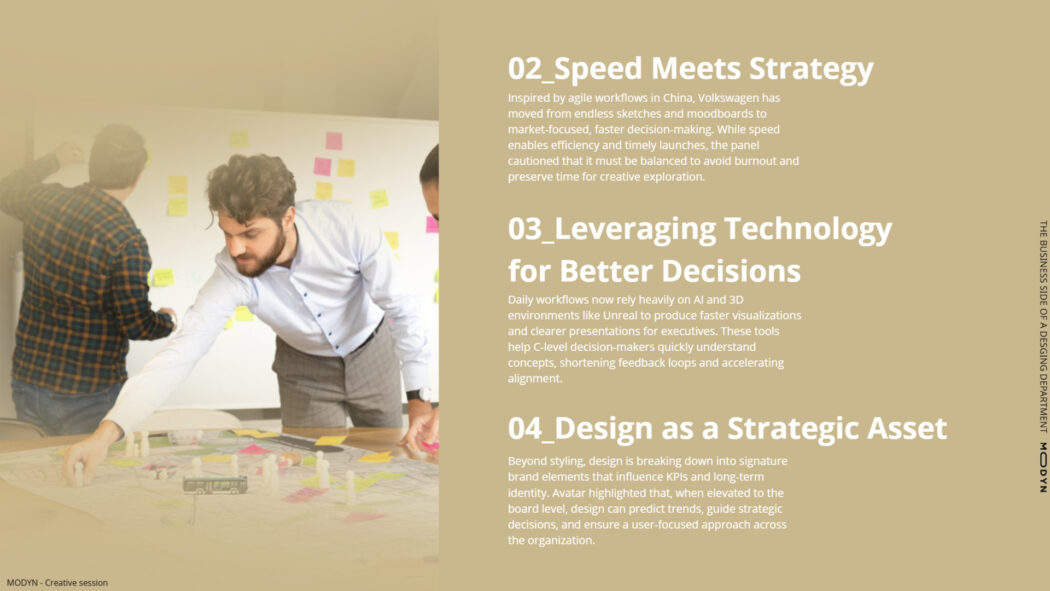
Speed Meets Strategy
Inspired by agile workflows in China, Volkswagen has moved from endless sketches and moodboards to market-focused, faster decision-making. While speed enables efficiency and timely launches, the panel cautioned that it must be balanced to avoid burnout and preserve time for creative exploration.
Leveraging Technology for Better Decisions
Daily workflows now rely heavily on AI and 3D environments like Unreal to produce faster visualizations and clearer presentations for executives. These tools help C-level decision-makers quickly understand concepts, shortening feedback loops and accelerating alignment.
Design as a Strategic Asset
Beyond styling, design is breaking down into signature brand elements that influence KPIs and long-term identity. Avatar highlighted that, when elevated to the board level, design can predict trends, guide strategic decisions, and ensure a user-focused approach across the organization.
We invite you to contact our team!
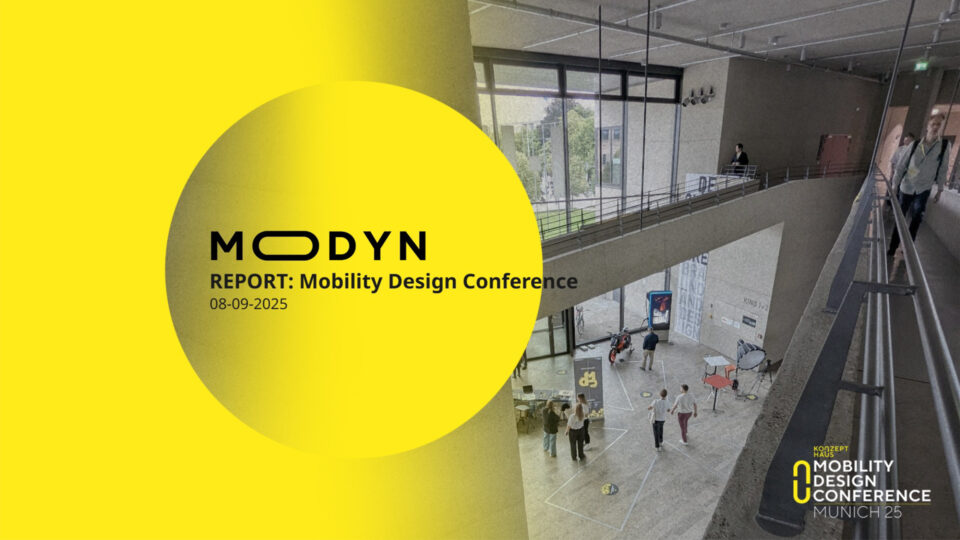
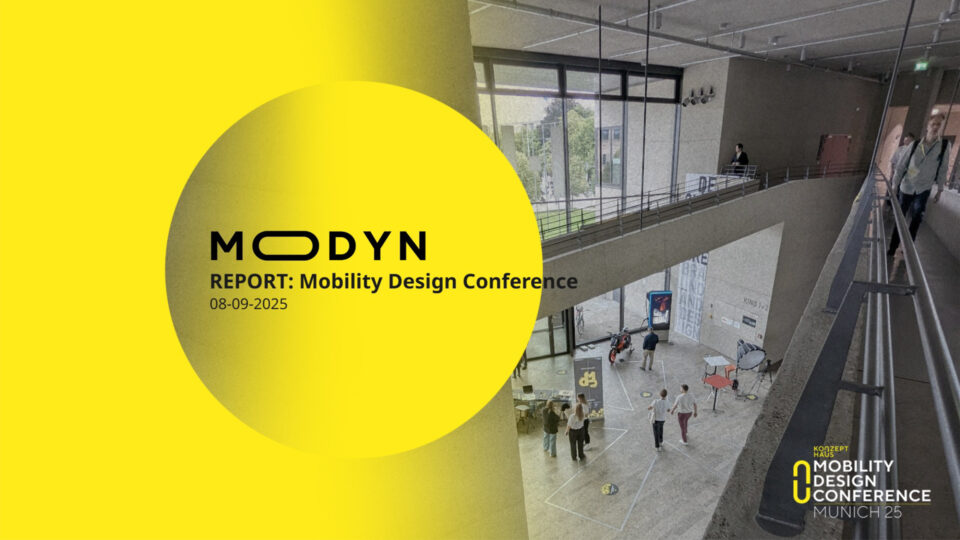
Download Our Exclusive Trend Report
Why You Need This Trend Report
Want to dive deeper into where mobility design is heading? Download our comprehensive trend report about the IAA Conference 2025. Simply fill out the form below to get your copy.
"*" indicates required fields