The world's leading trade fair for firefighting, rescue services and civil protection
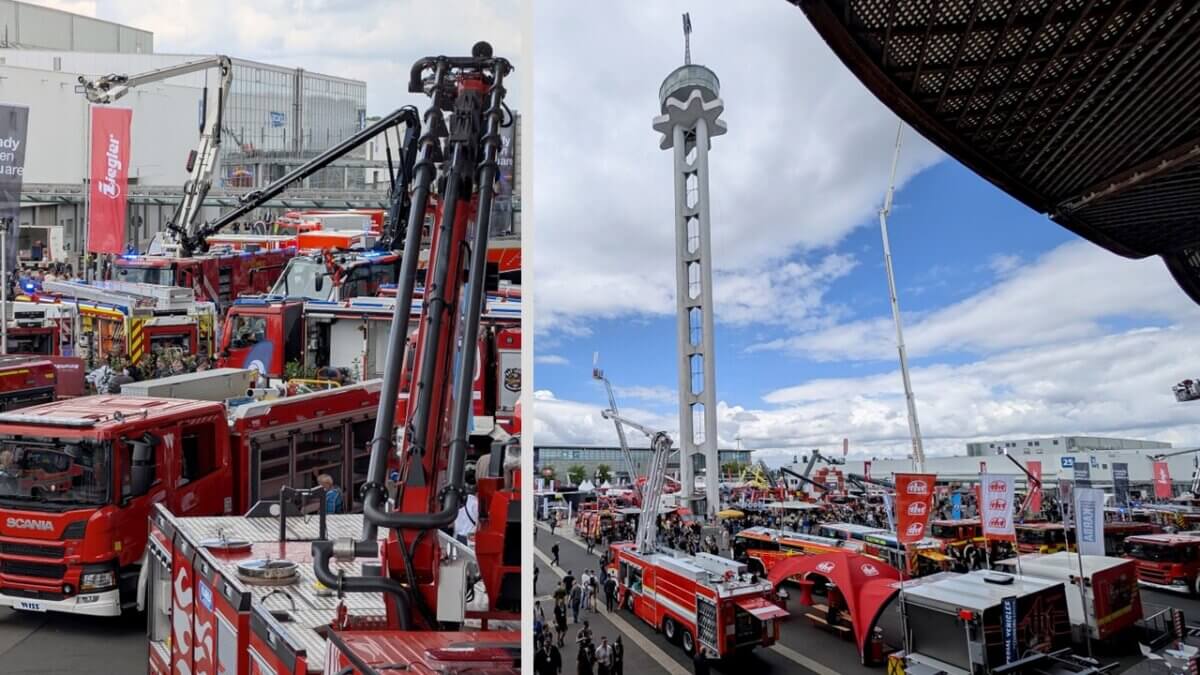
MODYN visited INTERSCHUTZ 2026, the world’s leading trade fair for firefighting, rescue services, civil protection, disaster management, and public safety.
Design opportunities in a function-driven industry
What stood out across the fair was that, while performance remains the foundation of every product, design is playing an increasingly important role. As technical performance becomes more comparable between brands, companies are looking for new ways to differentiate through styling, usability, CMF, and a stronger, more consistent brand identity.
This shift could be seen across a wide range of categories. Emergency vehicles are integrating visibility features more thoughtfully into their overall design. Functional apparel is combining technical innovation with increasingly sophisticated CMF strategies. Lighting systems are becoming more integrated and refined, while safety equipment is evolving to better fit public and residential environments. Even in emerging fields such as robotics, opportunities are appearing to create products that feel more approachable and intuitive.
This report highlights the key design, CMF, and innovation trends observed at INTERSCHUTZ 2026 and identifies opportunities for brands looking to create more distinctive products and stronger user experiences.
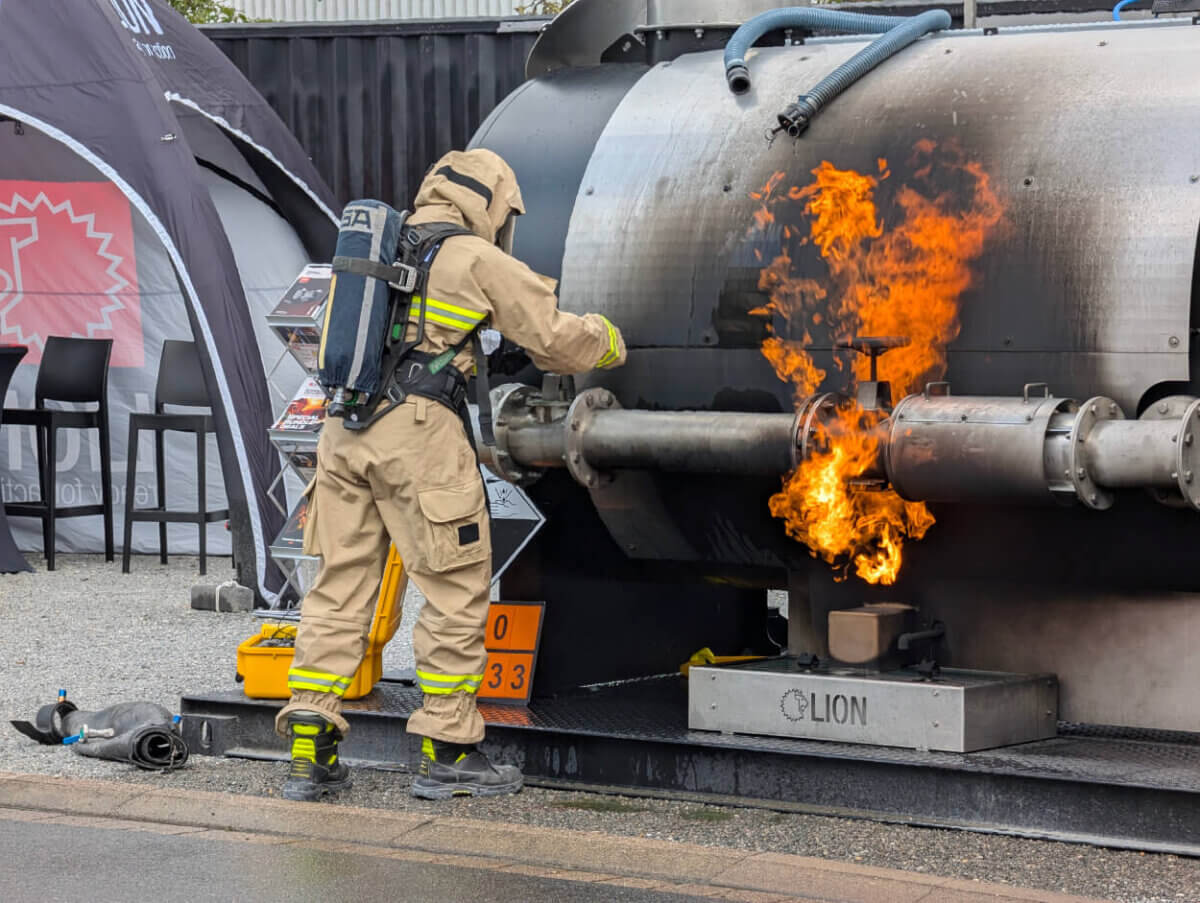
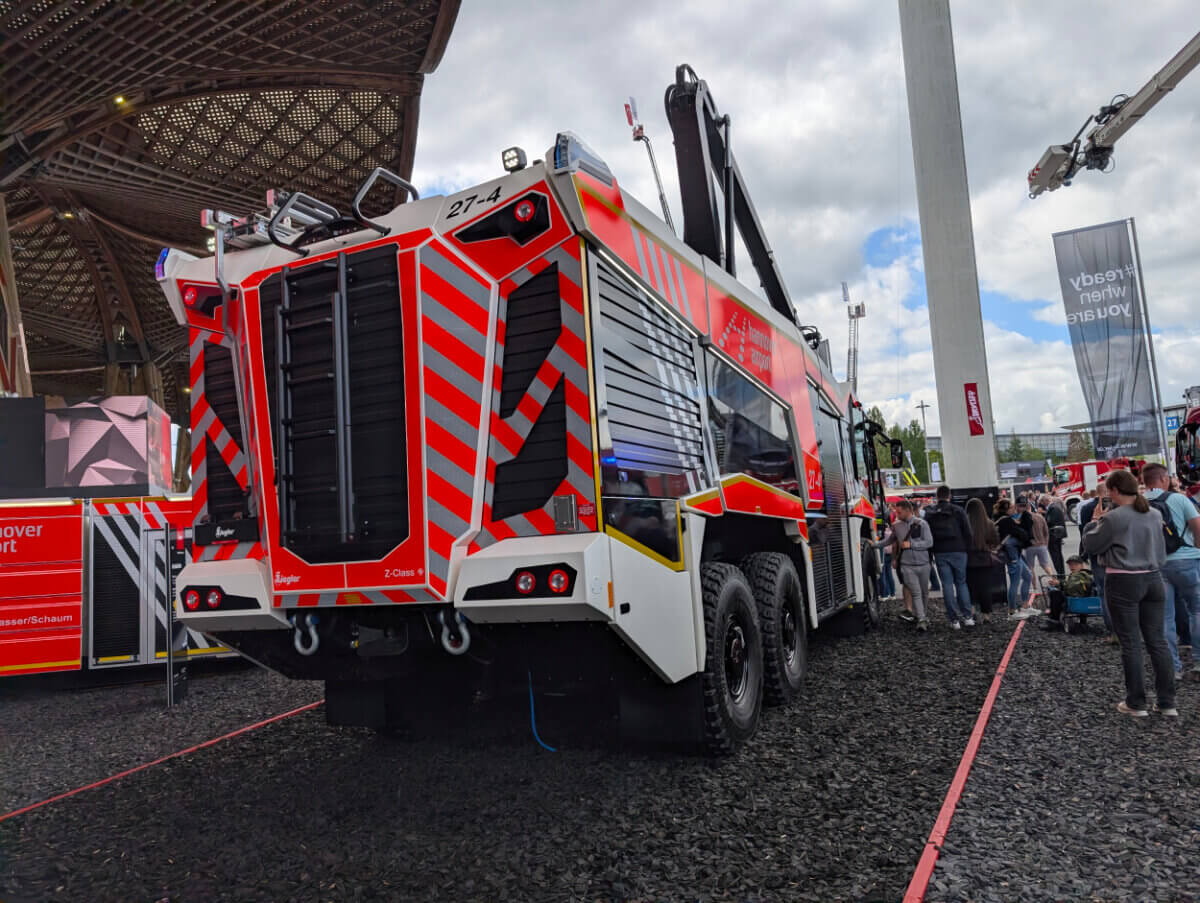
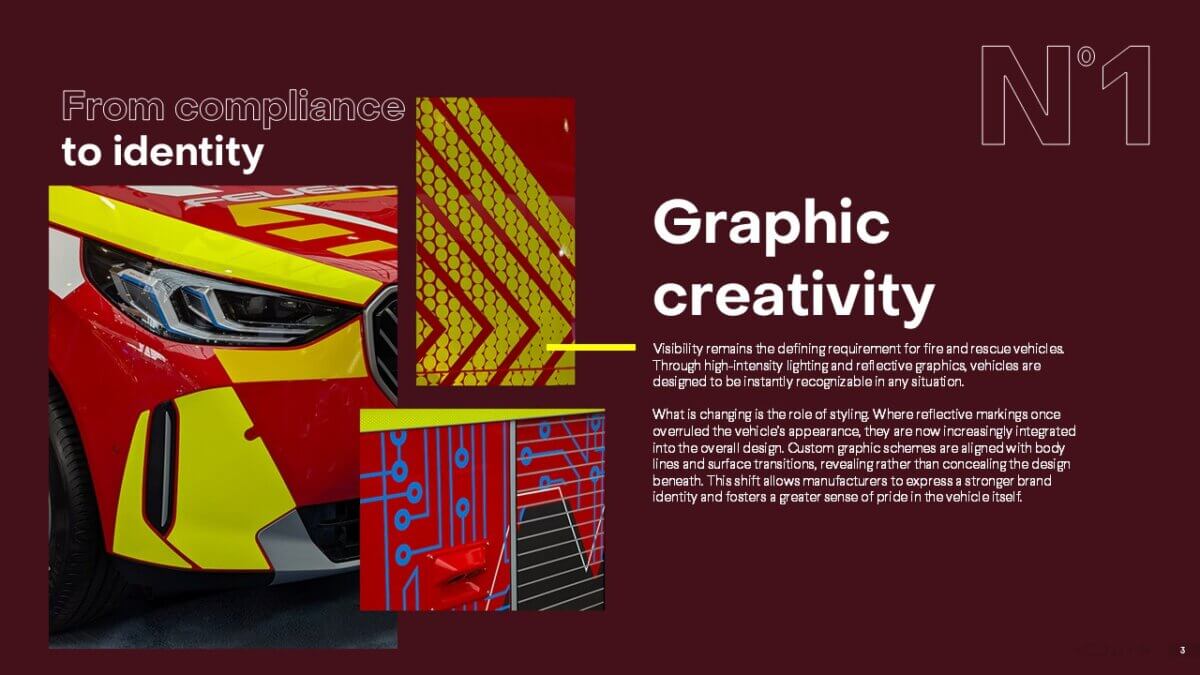
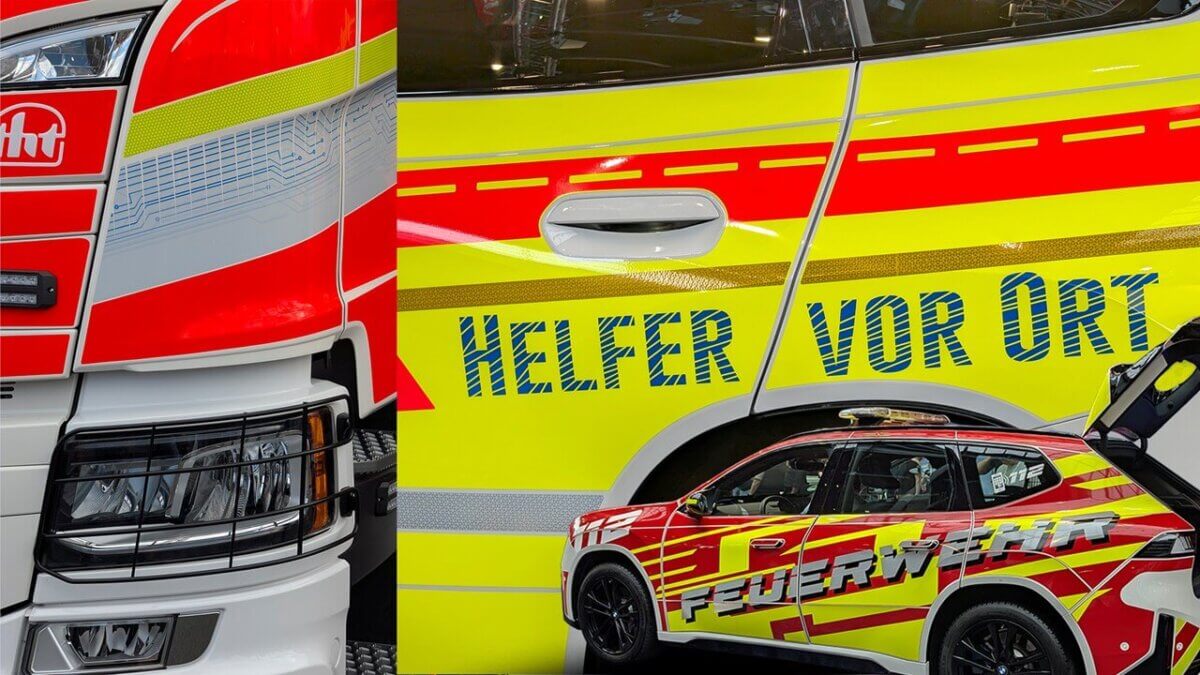
Visibility remains the defining requirement for fire and rescue vehicles. Through high-intensity lighting and reflective graphics, vehicles are designed to be instantly recognizable in any situation.
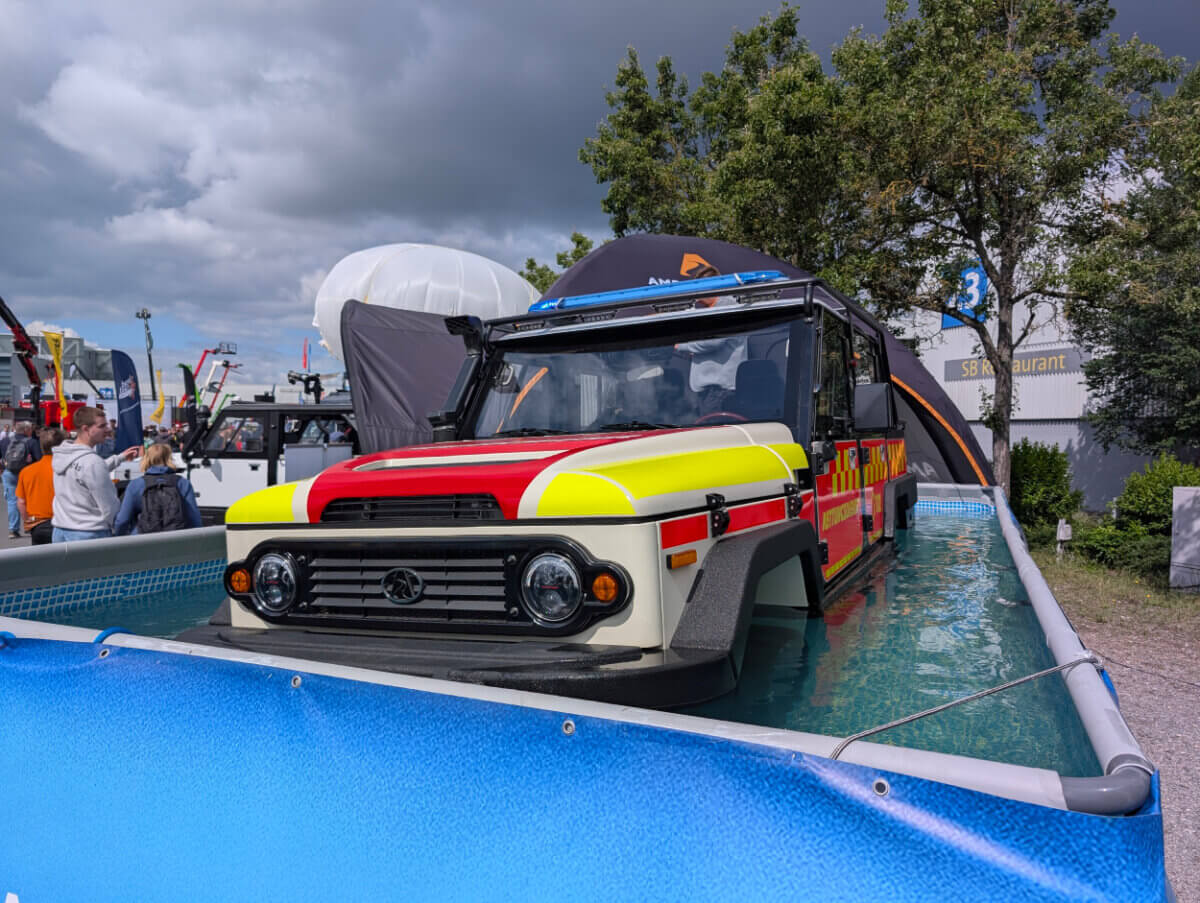
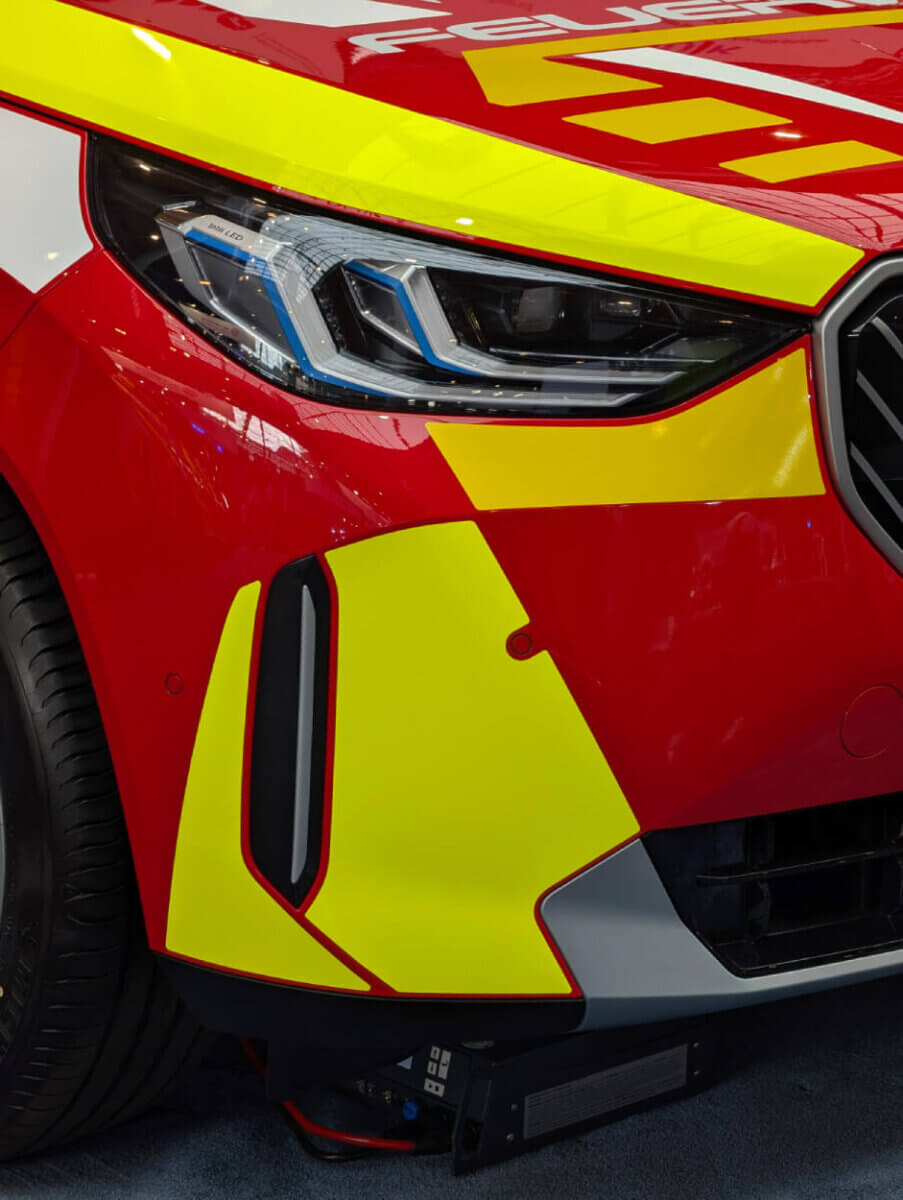
What is changing is the role of styling. Where reflective markings once overruled the vehicle’s appearance, they are now increasingly integrated into the overall design. Custom graphic schemes are aligned with body lines and surface transitions, revealing rather than concealing the design beneath. This shift allows manufacturers to express a stronger brand identity and fosters a greater sense of pride in the vehicle itself.
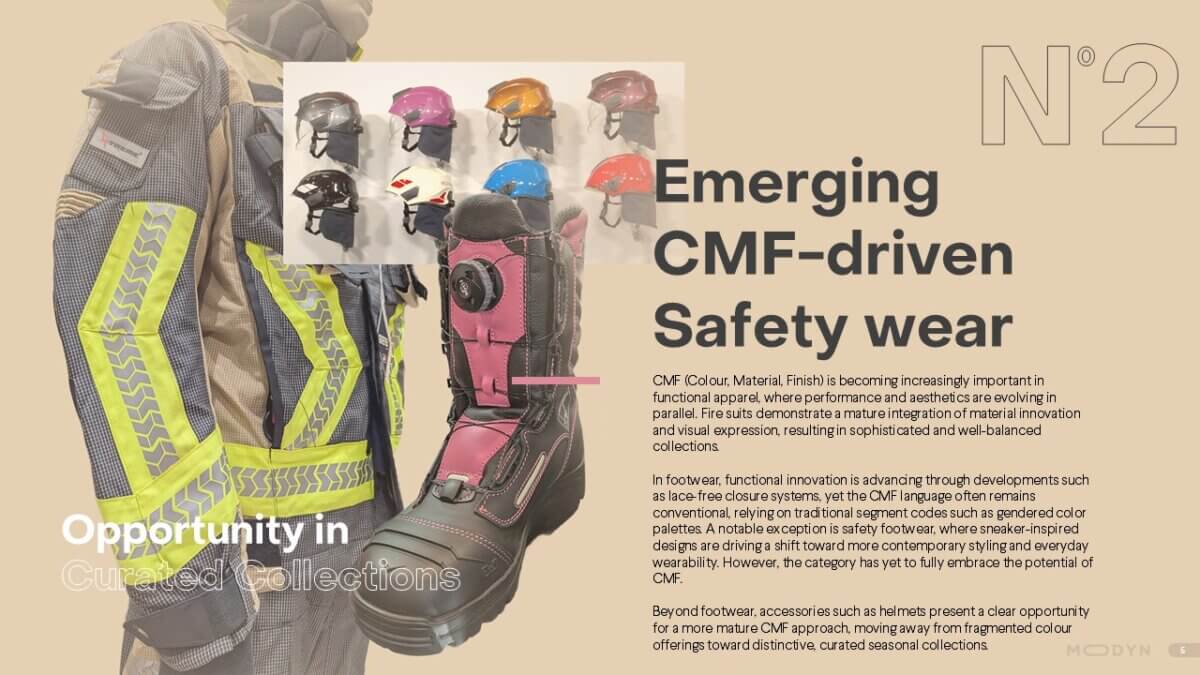
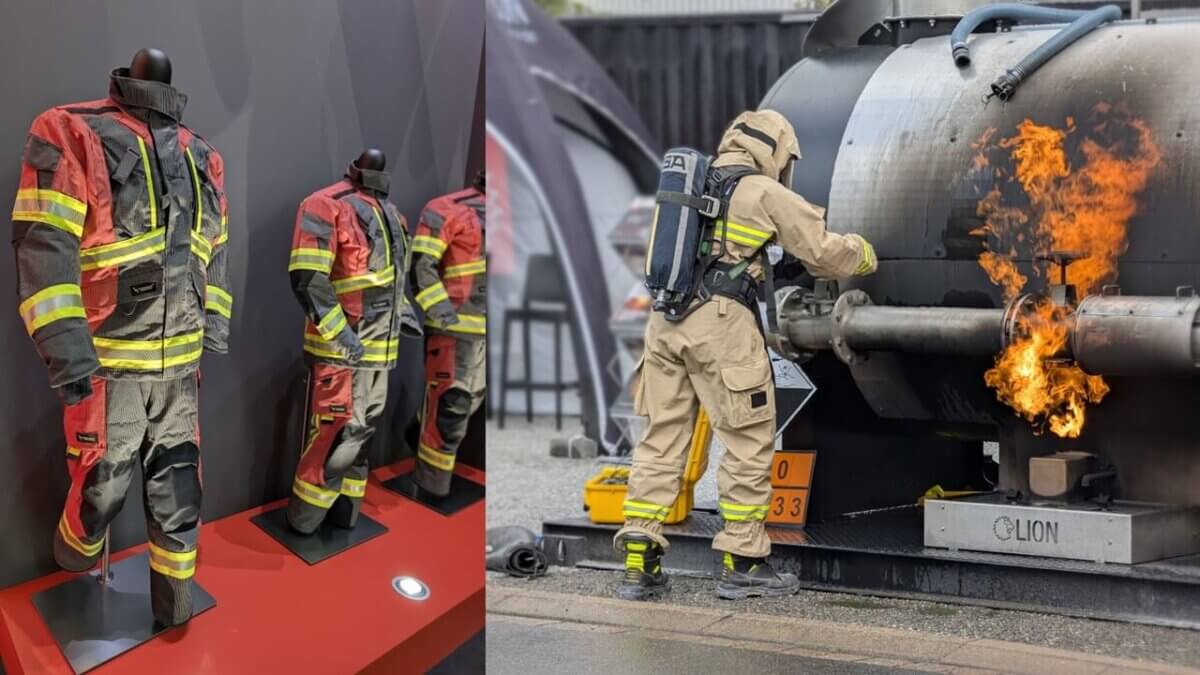
CMF (Color, Material, Finish) is becoming increasingly important in functional apparel, where performance and aesthetics are evolving in parallel. Fire suits demonstrate a mature integration of material innovation and visual expression, resulting in sophisticated and well-balanced collections.
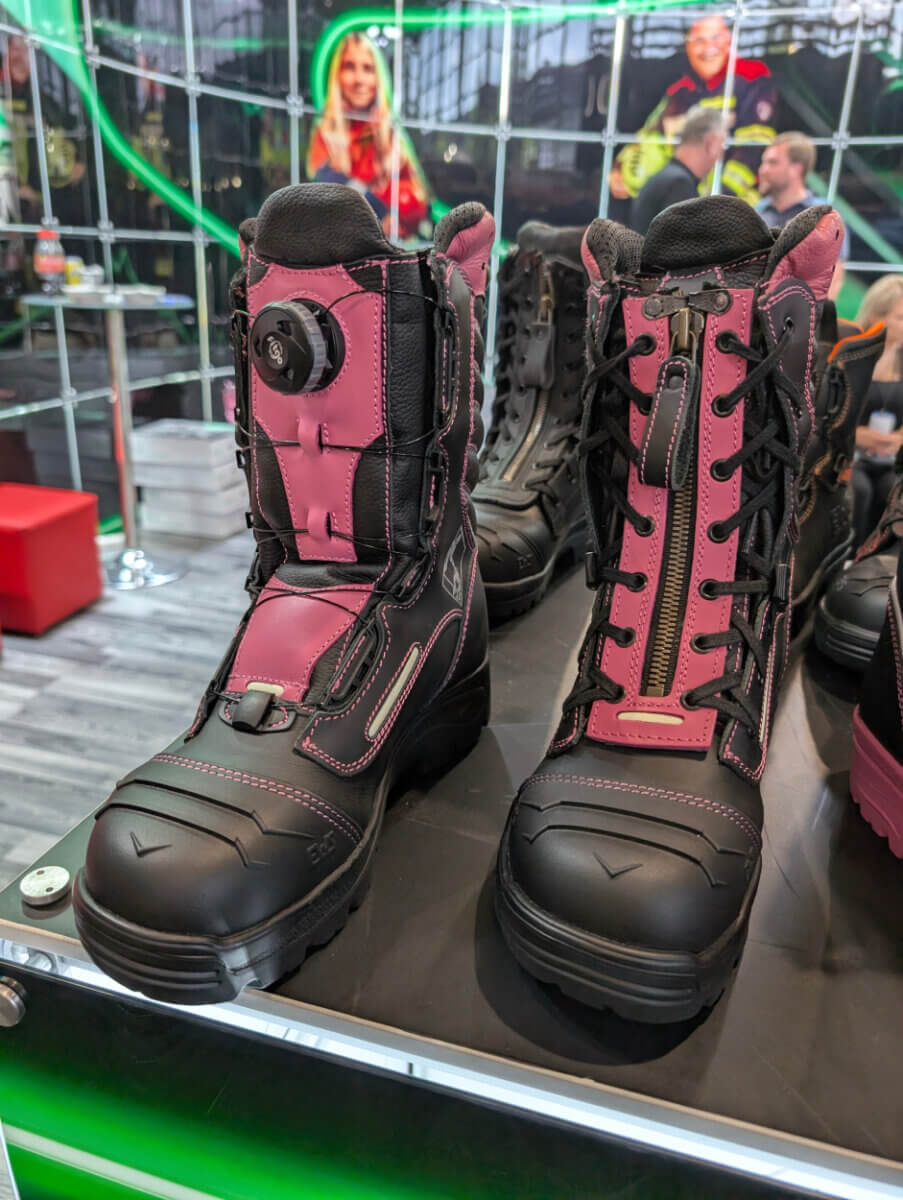
In footwear, functional innovation is advancing through developments such as laceless closure systems (BOA like), yet the CMF language often remains conventional, relying on traditional segment codes such as gendered color palettes. A notable exception is safety footwear, where sneaker-inspired designs are driving a shift toward more contemporary styling and everyday wearability. However, the category still lags behind in CMF evolution.
Beyond footwear, accessories such as helmets present a clear opportunity for a more mature CMF approach, moving away from fragmented color offerings toward distinctive, curated seasonal collections.
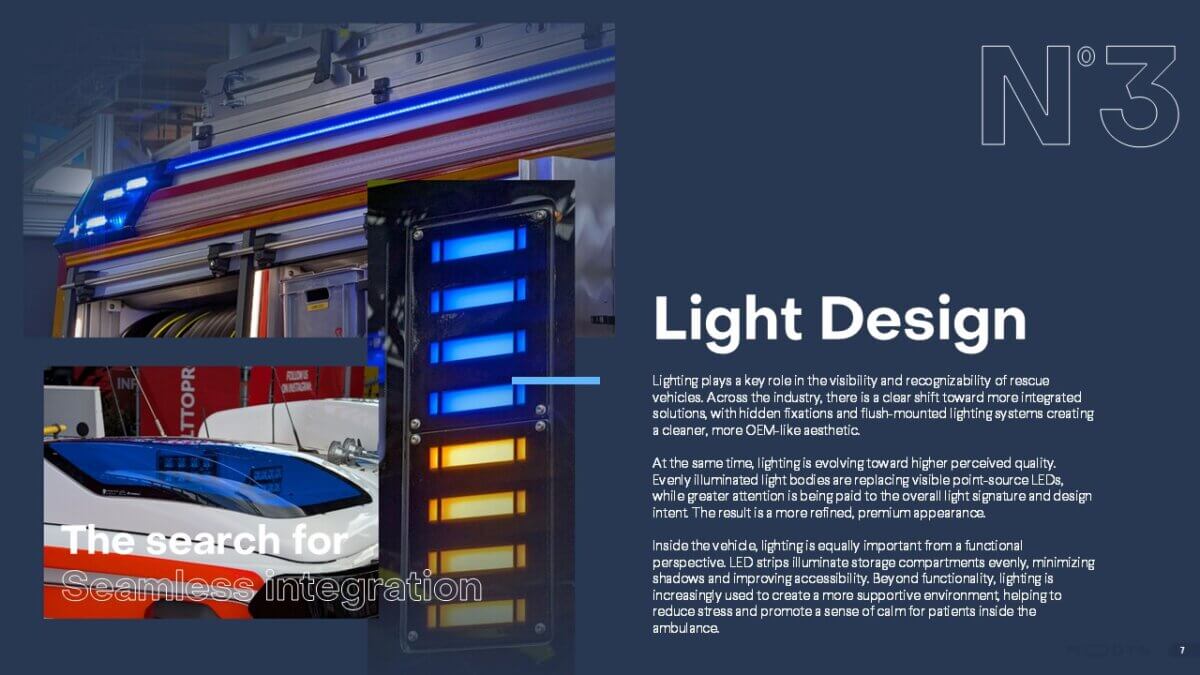
Lighting plays a key role in the visibility and recognizability of rescue vehicles. Across the industry, there is a clear shift toward more integrated solutions, with hidden fixations and flush-mounted lighting systems creating a cleaner, more OEM-like aesthetic. At the same time, lighting is evolving toward higher perceived quality. Evenly illuminated light bodies are replacing visible point-source LEDs, while greater attention is being paid to the overall light signature and design intent. The result is a more refined, premium appearance.
Inside the vehicle, lighting is equally important from a functional perspective. LED strips illuminate storage compartments evenly, minimizing shadows and improving accessibility. Beyond functionality, lighting is increasingly used to create a more supportive environment, helping to reduce stress and promote a sense of calm for patients inside the ambulance.
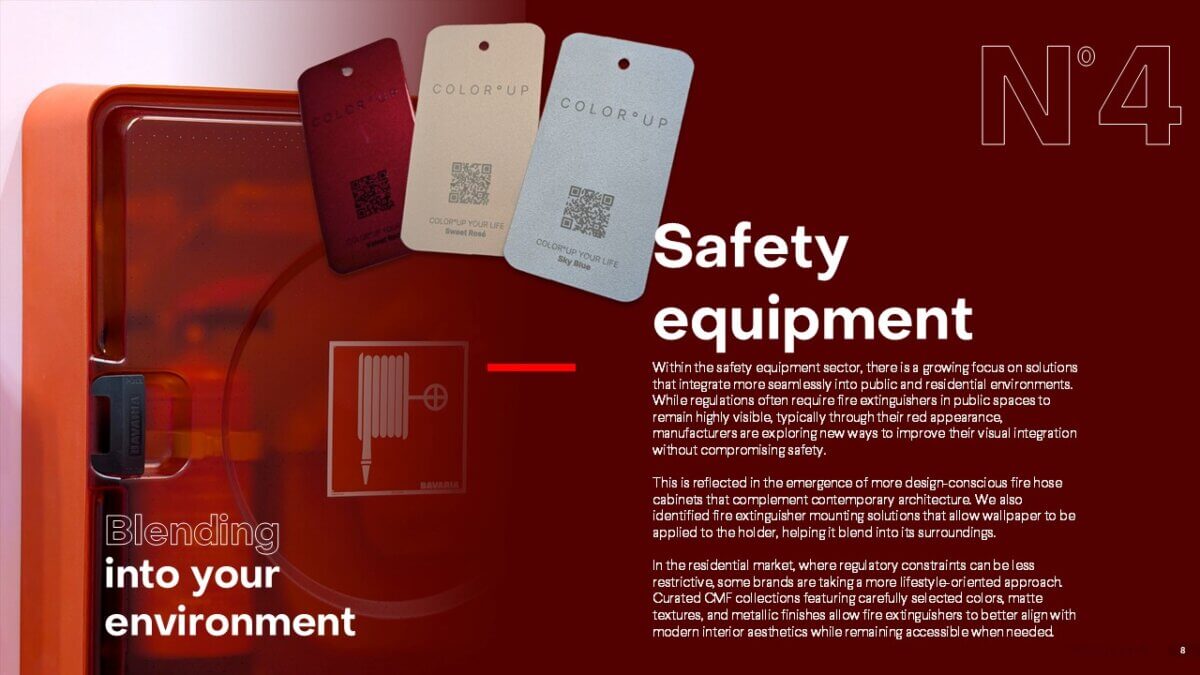
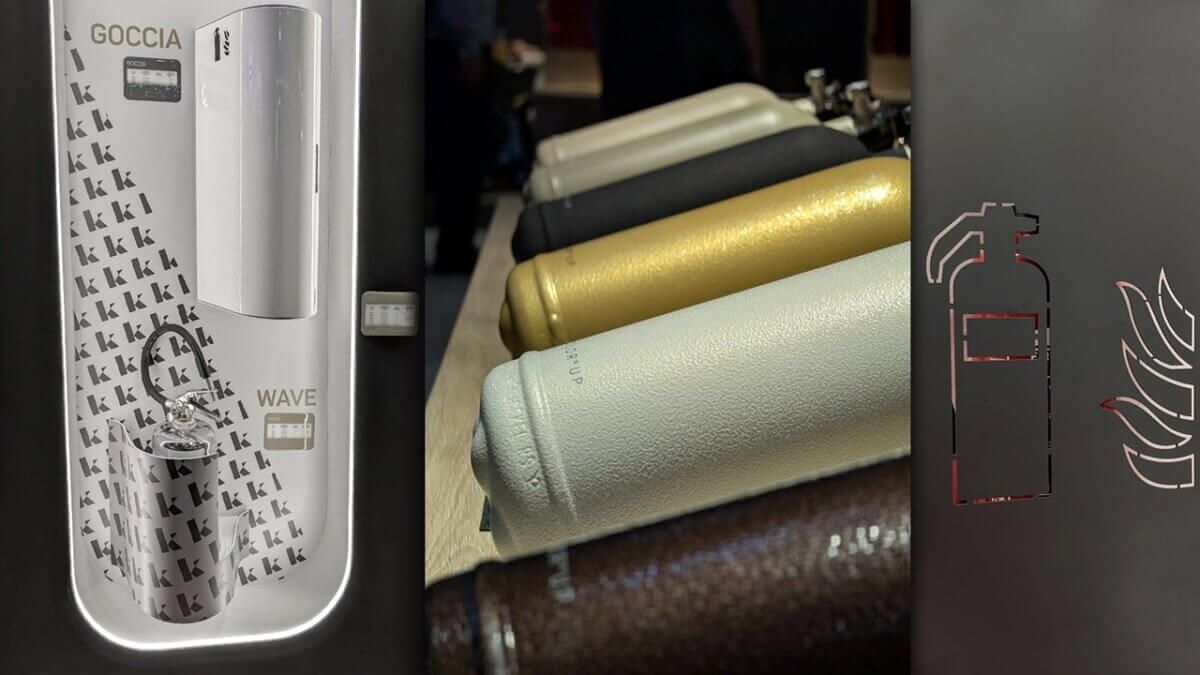
Within the safety equipment sector, there is a growing focus on solutions that integrate more seamlessly into public and residential environments. While regulations often require fire extinguishers in public spaces to remain highly visible, typically through their red appearance, manufacturers are exploring new ways to improve their visual integration without compromising safety.
This is reflected in the emergence of more design-conscious fire hose cabinets that complement contemporary architecture. We also identified fire extinguisher mounting solutions that allow wallpaper to be applied to the holder, helping it blend into its surroundings.
In the residential market, where regulatory constraints can be less restrictive, some brands are taking a more lifestyle-oriented approach. Curated CMF collections featuring carefully selected colors, matte textures, and metallic finishes allow fire extinguishers to better align with modern interior aesthetics while remaining accessible when needed.
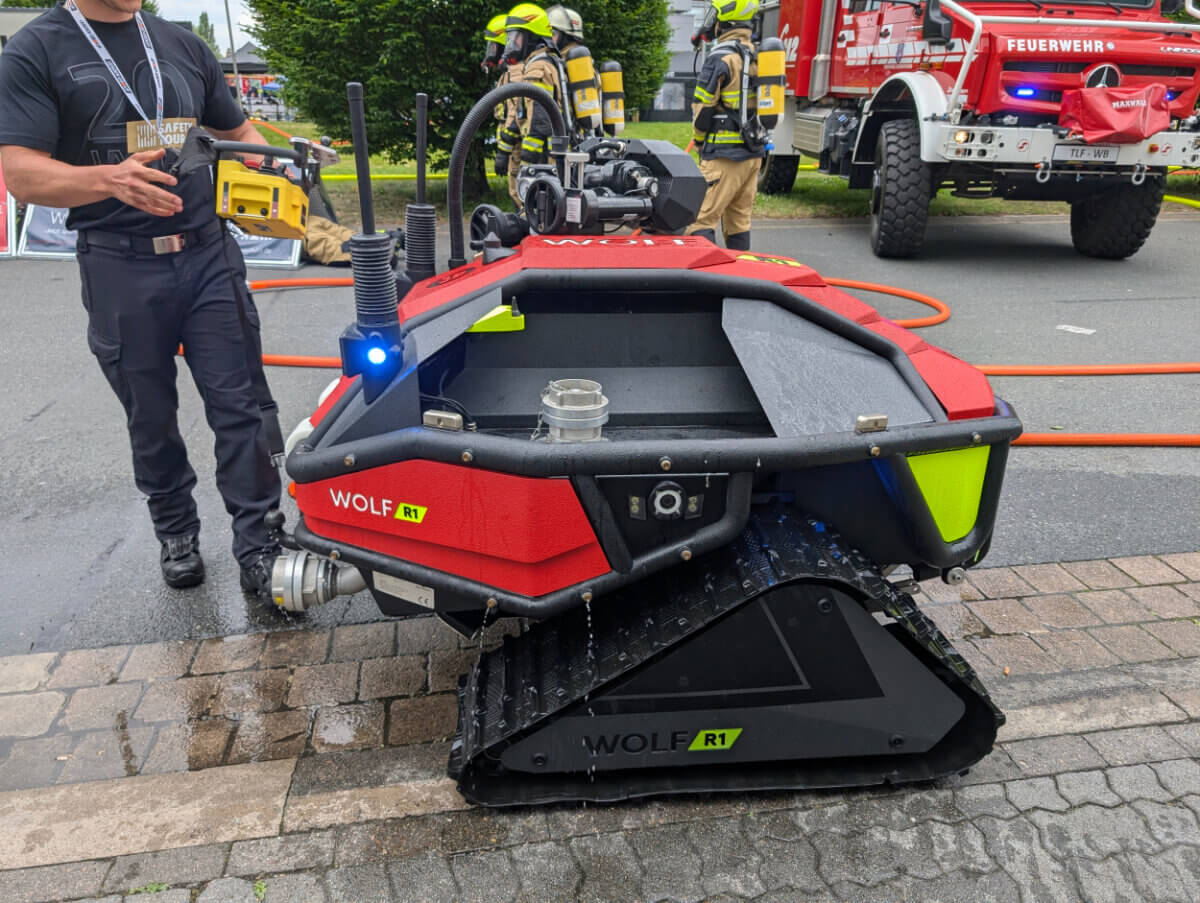
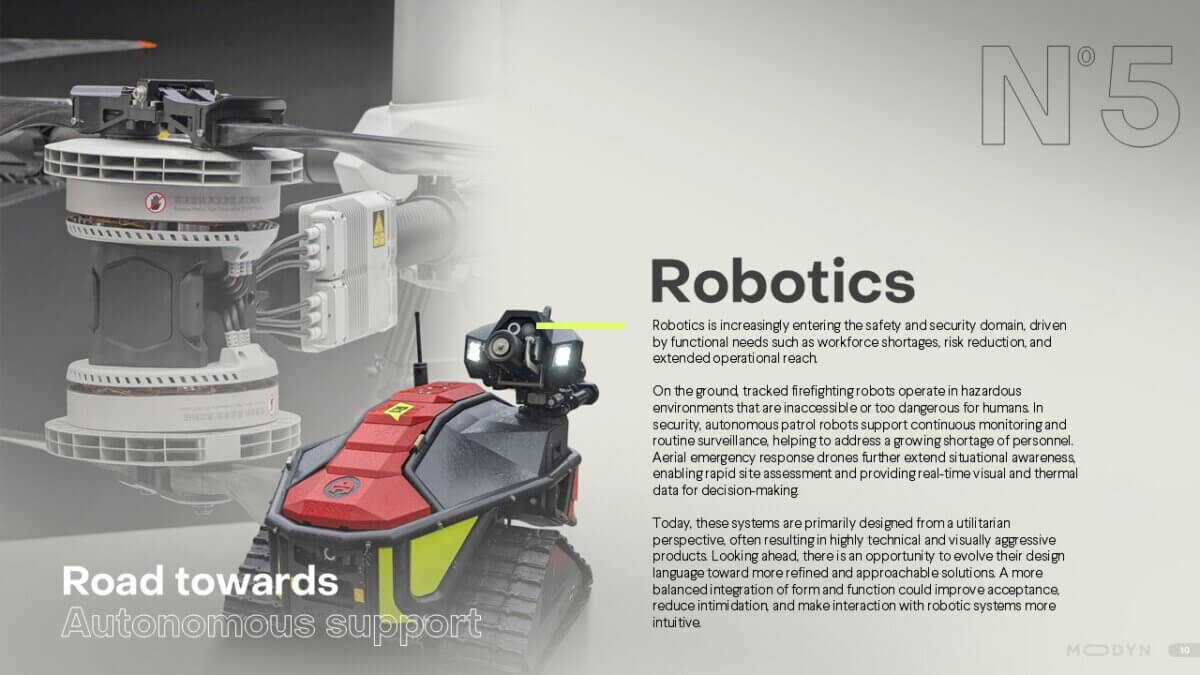
Robotics is increasingly entering the safety and security domain, driven by functional needs such as workforce shortages, risk reduction, and extended operational reach.
On the ground, tracked firefighting robots operate in hazardous environments that are inaccessible or too dangerous for humans. In security, autonomous patrol robots support continuous monitoring and routine surveillance, helping to address a growing shortage of personnel. Aerial emergency response drones further extend situational awareness, enabling rapid site assessment and providing real-time visual and thermal data for decision-making.
Today, these systems are primarily designed from a utilitarian perspective, often resulting in highly technical and visually aggressive products. Looking ahead, there is an opportunity to evolve their design language toward more refined and approachable solutions. A more balanced integration of form and function could improve acceptance, reduce intimidation, and make interaction with robotic systems more intuitive.
Curious what innovations you’re planning next, up for a quick, no-obligation call to exchange ideas?

"*" indicates required fields