Kibo motorcycle Fender
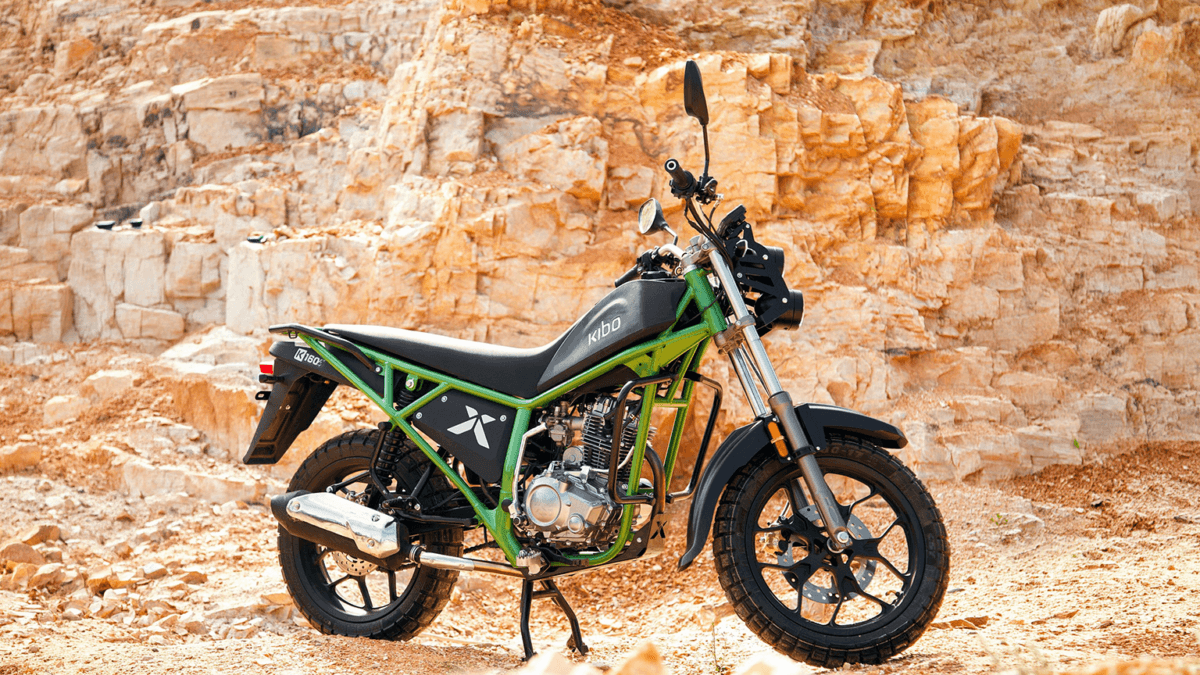
- Case 160E Motorcycle front fender
- Client Kibo
- Industry Mobility
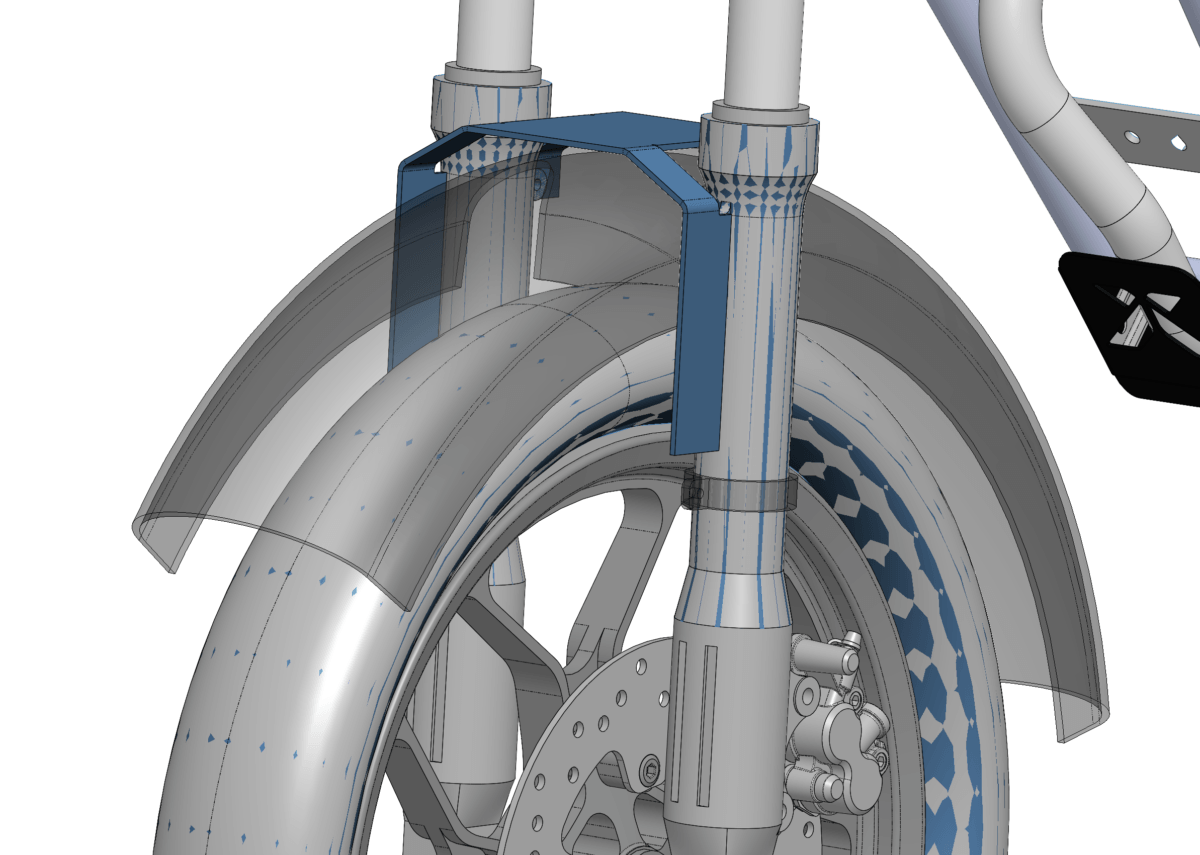
Testing showed that the original high fender did not provide sufficient protection against water spray. To solve this, we developed a low-mounted front fender, that better matched the bike’s mixed character of Urban and Off-road.
The design was integrated within the existing K160E fork geometry. Additionally, it was made compatible with the R-models, allowing it to be offered as an optional accessory.
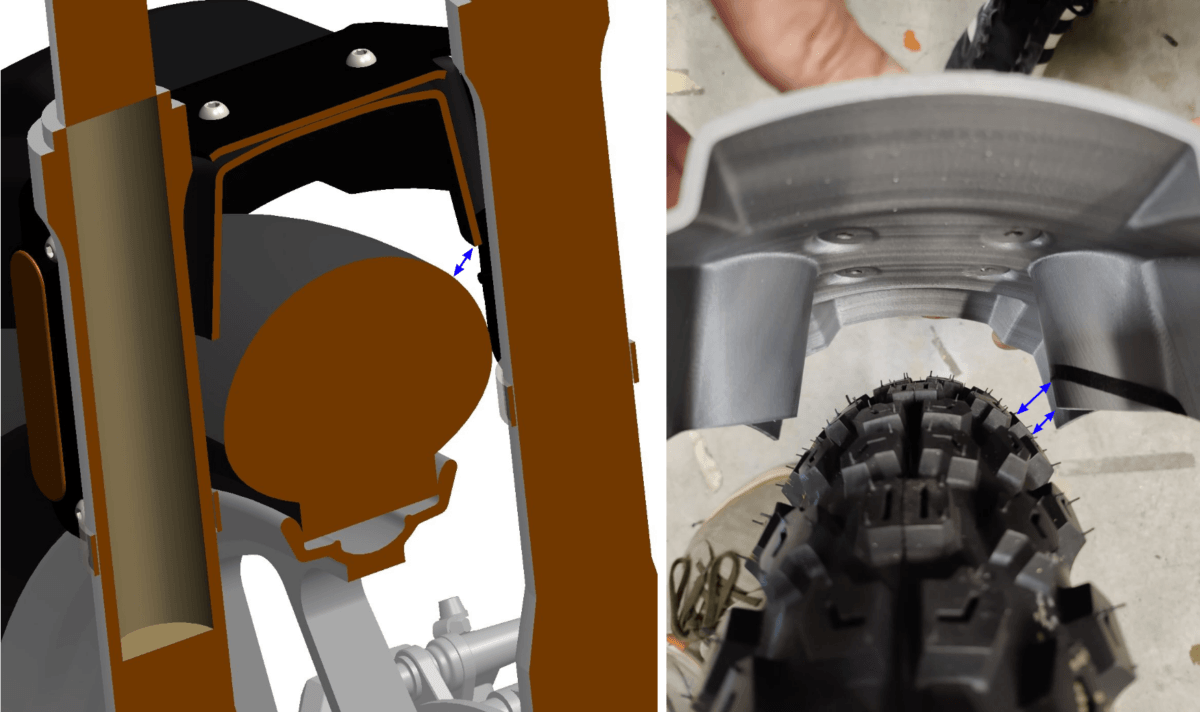
One of the main challenges in this project was balancing functionality, manufacturability, and seamless integration within an existing platform. The fender needed enough tire clearance to effectively manage water spray, while still preventing excessive space where mud could accumulate. At the same time, the design had to match the motorcycle’s visual language and integrate naturally with the existing high-mounted fender.
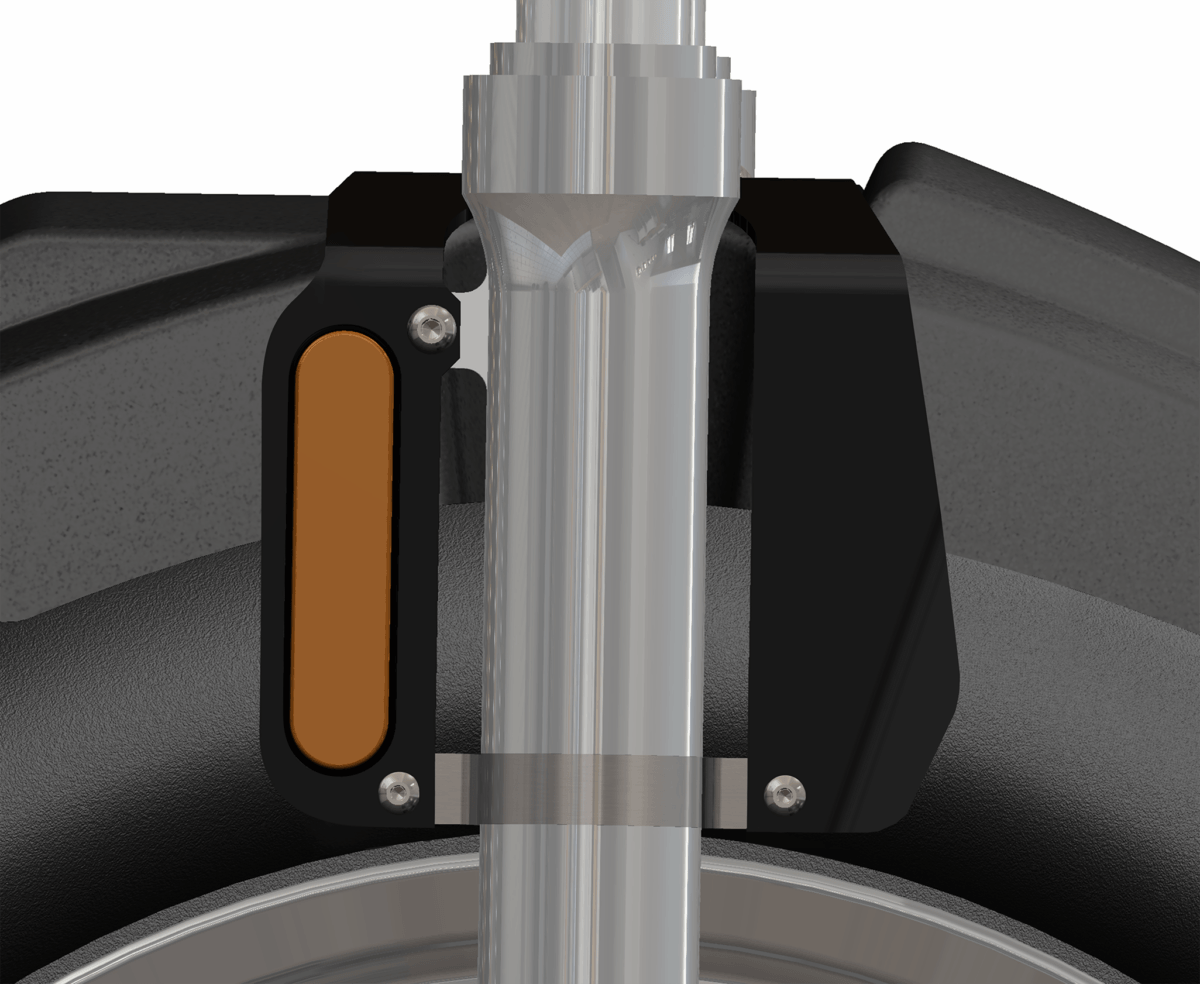
In addition, the project required the development of a simple and cost-effective thermoformed part without compromising durability or appearance. We also designed a dedicated mounting bracket that could attach to existing front fork mounting points, even though these were not originally intended for fender installation. Throughout the development process, we continuously considered assembly and installation as well, ensuring the final solution remained straightforward, efficient, and practical to manufacture.
During the research phase, we analyzed existing motorcycle fender solutions on the market to better understand common design approaches, mounting strategies, and proportions within the urban, off-road, and lightweight motorcycle segment. This research helped define a direction that balanced functionality with a design language that fits the K160E platform.
At the same time, we focused the technical research on tire clearance requirements, water and mud management, and the full suspension travel of the front fork. In particular, we carefully studied the available clearances throughout the complete suspension movement to ensure the fender would never interfere with the frame or other components under any riding condition. As a result, the final design maintained both reliable functionality and compact proportions without compromising usability.
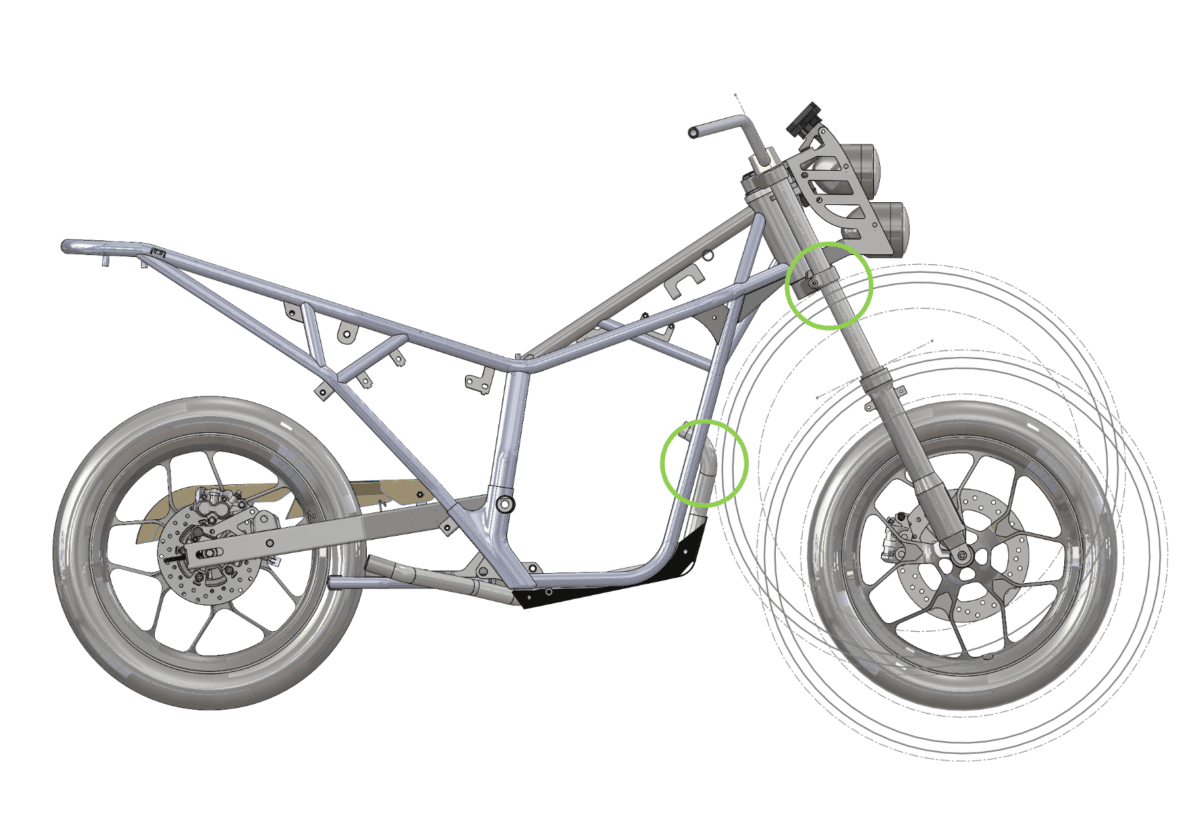
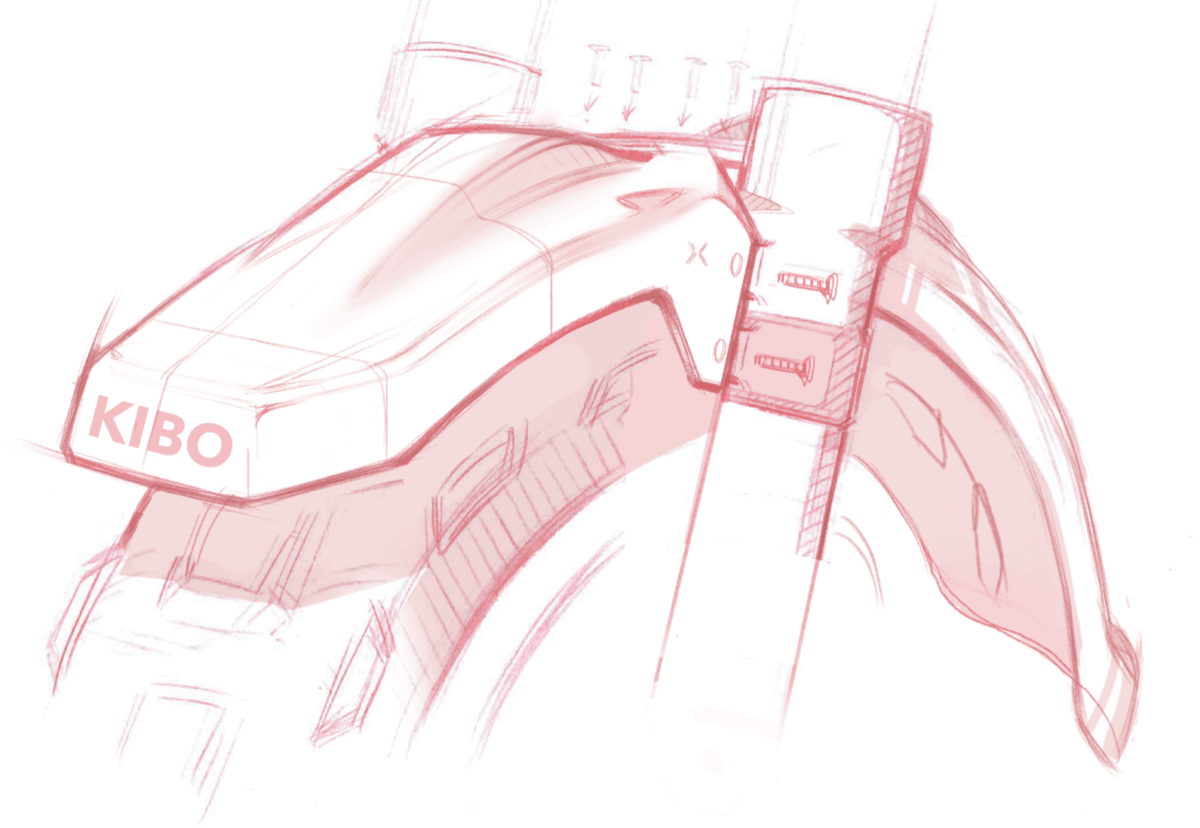
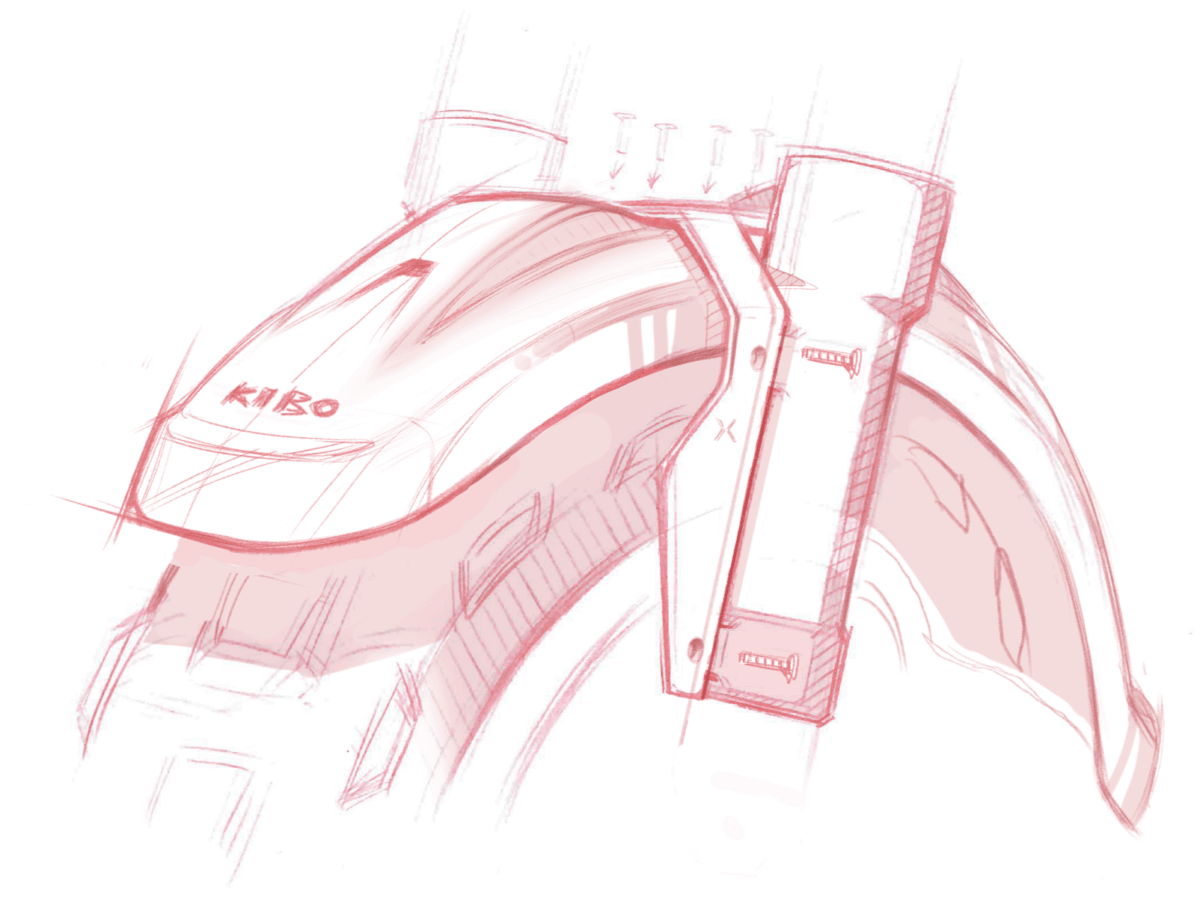
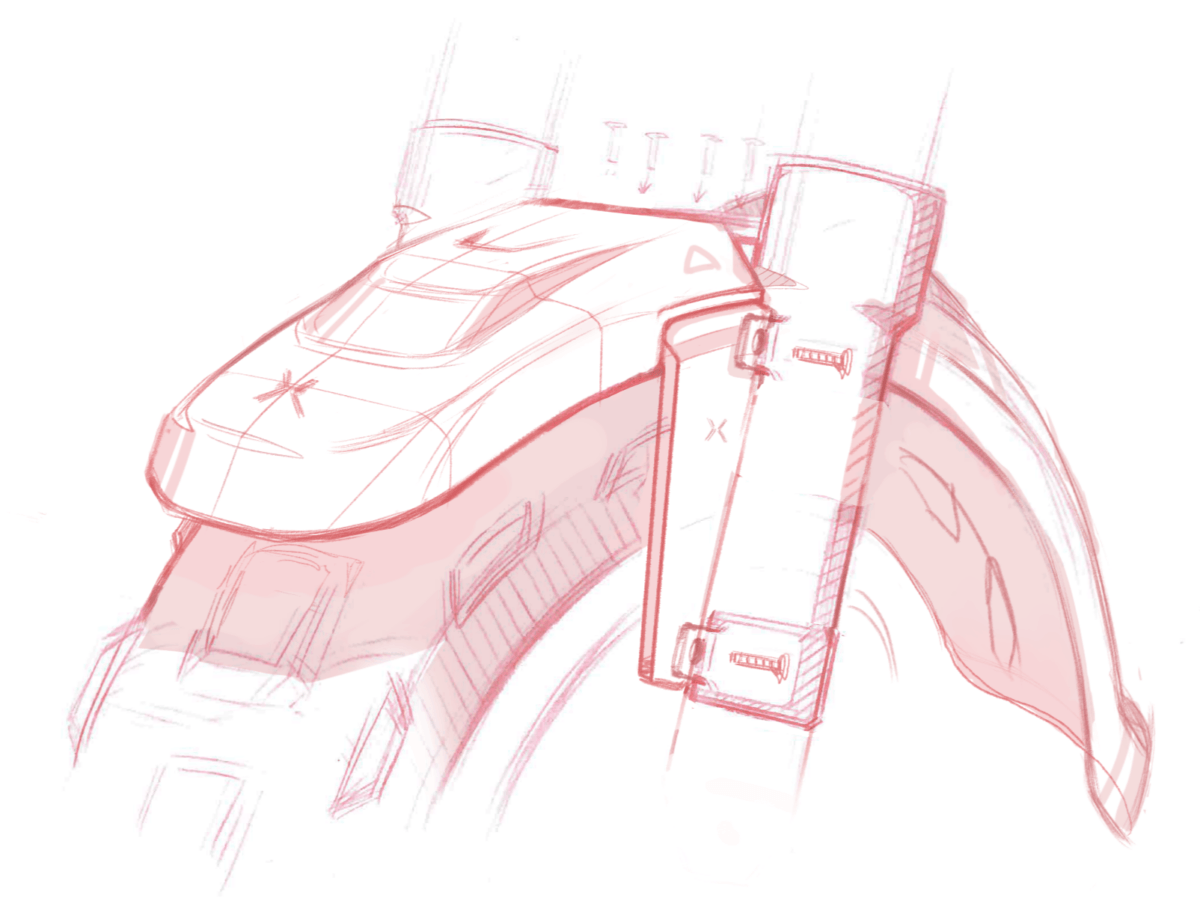
The design process focused on creating a fender that balanced functionality, manufacturability, and visual integration with the motorcycle. Early concepts explored different shapes and mounting positions to achieve the right mix of water protection, tire clearance, and a clean urban appearance.
Throughout development, the design evolved continuously around the existing geometry of the K160E front fork and its suspension travel. We paid close attention to maintaining proper clearances while keeping the overall form compact and visually lightweight.
At the same time, the design considered thermoforming from the start, resulting in a simple and cost-effective construction. Alongside the fender itself, we developed a dedicated mounting bracket that integrates with the existing fork mounting points and enables straightforward assembly and installation.
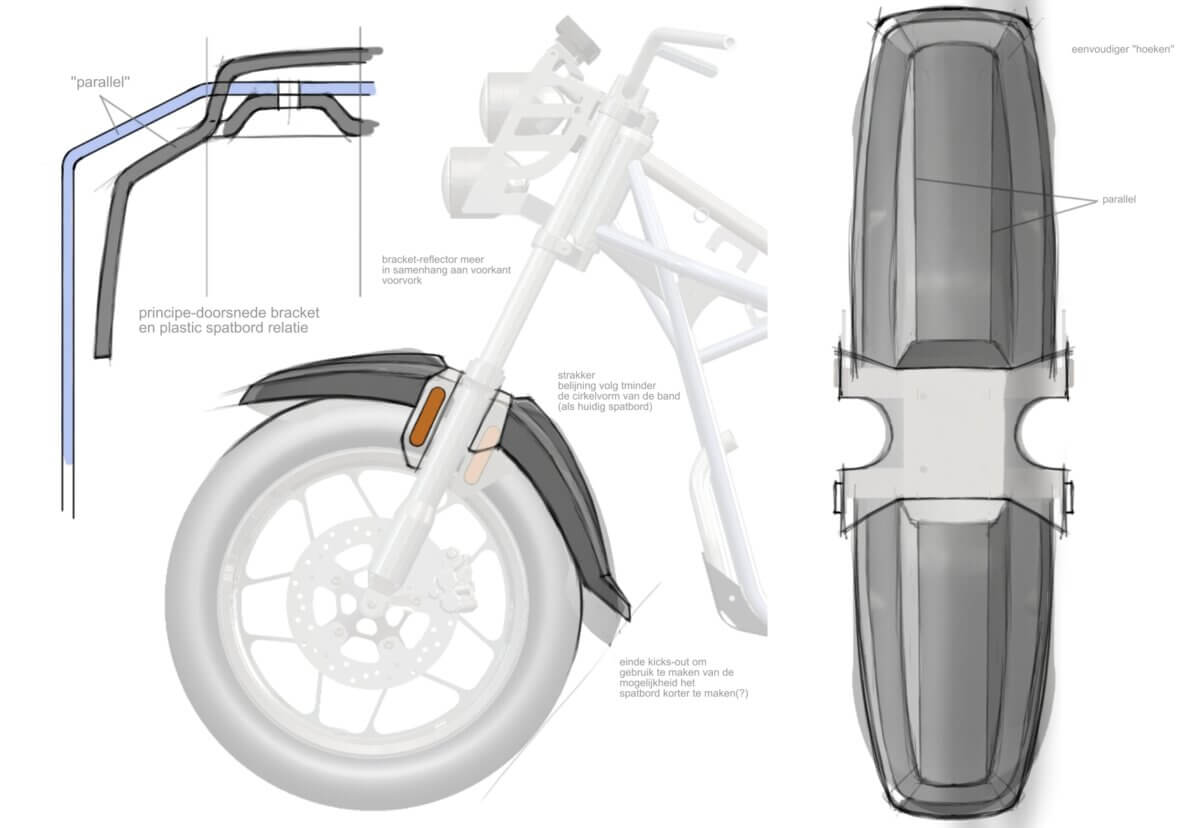
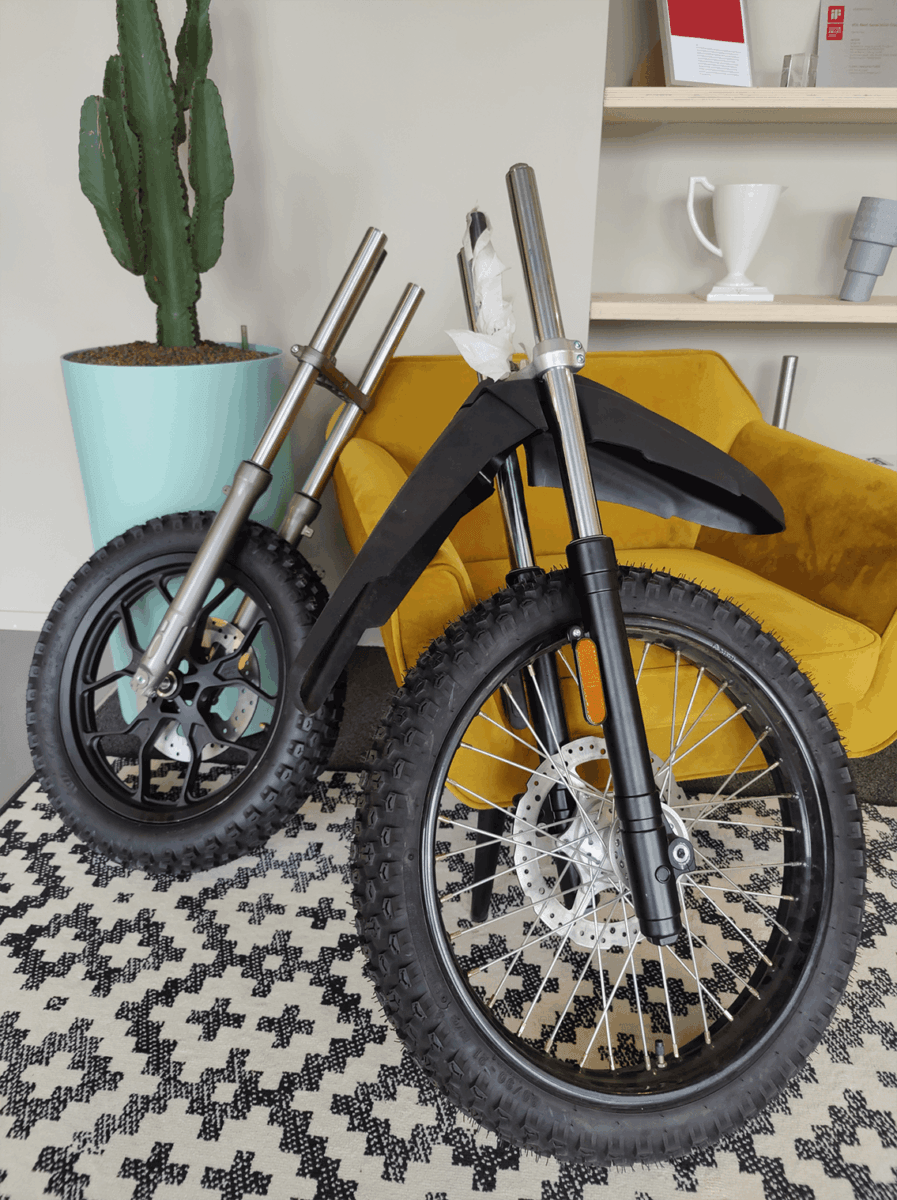
We tested multiple digital iterations to optimize the balance between coverage, compact proportions, and visual alignment with the motorcycle’s design language. Throughout development, we also created and extensively tested quick physical mock-ups and 3D printed prototype parts directly on the motorcycle. This hands-on process allowed us to evaluate and refine fitment, clearances, assembly, and overall proportions early in the development stage. As a result, we could identify potential issues quickly and continuously improve the design before moving into final production.